

There’s something utterly enchanting about whipping up a vibrant, green sauce in your own kitchen. When those glossy basil leaves tumble out of the box at the farmer’s market, you can almost feel their zest for life. As you gather fresh herbs, pine nuts, garlic, and that glorious Parmesan-Reggiano, you’re not only combining flavors—you’re building memories. The deep emerald color of homemade pesto feels like summer captured in a jar, ready to brighten pasta, sandwiches, and more whenever you please. Every step from pulsing the basil to drizzling in the extra virgin olive oil is a sensory experience that makes you feel more connected to your food, like crafting something truly yours.
Once you taste that first spoonful—herbaceous basil dancing with nutty pine nuts, a pinch of garlic heat, and the creamy umami of Parmesan—you’ll wonder why you ever settled for store-bought. This classic homemade basil pesto comes together in minutes, yet stuns with depth and freshness. Whether you’re a seasoned cook or just starting out, you’ll find this recipe a delightful gateway into the world of fresh-herb sauces. The best part? You can tweak it to your heart’s desire—swap nuts, add a squeeze of lemon, or pile it on grilled chicken. So roll up your sleeves, fire up the food processor, and let’s transform those humble ingredients into your new kitchen superstar.
KEY INGREDIENTS IN CLASSIC HOMEMADE BASIL PESTO
Every exceptional pesto starts with quality components. Here’s what makes this recipe shine and how each ingredient plays its part in flavor, texture, and aroma:
- Fresh basil leaves
These bright green leaves are the heart and soul of the sauce, offering a sweet, slightly peppery taste and vivid color that immediately transports you to the Italian countryside.
- Parmesan-Reggiano cheese
Grated to creamy perfection, this aged cheese brings a savory, nutty backbone and helps thicken the pesto, lending that irresistible cheesy bite in every forkful.
- Extra virgin olive oil
Rich and fruity, it binds all the elements together into a smooth emulsion while adding a lush mouthfeel and a hint of peppery warmth.
- Pine nuts
Toasty and buttery, these tiny nuts introduce a subtle crunch, deepen the flavor profile, and enrich the sauce’s texture.
- Garlic cloves
Minced finely, garlic infuses the pesto with a gentle kick, balancing the sweetness of basil with aromatic intensity and a touch of zing.
- Salt and freshly ground black pepper
Essential seasonings that sharpen flavors, enhance the natural sweetness of basil, and round out the overall taste profile of your creation.
HOW TO MAKE CLASSIC HOMEMADE BASIL PESTO
Turning fresh ingredients into lusciously green pesto is simpler than you might think. In just a few pulses and drizzles, you’ll have a versatile sauce ready for pasta, dips, and more.
1. Place the basil leaves and pine nuts into a food processor. Pulse several times until the ingredients are roughly chopped, forming a coarse mixture that ensures an even distribution of flavors.
2. Add the minced garlic to the processor. Pulse a few more times so the garlic blends in gently, introducing its fragrant heat without overpowering the basil’s freshness.
3. Slowly add the Parmesan-Reggiano cheese and pulse a few times. Make sure the cheese is completely incorporated, creating ribbons of creamy texture throughout the herb mixture.
4. While the food processor is running, slowly drizzle the extra virgin olive oil into the mixture. Blend until the pesto reaches your desired consistency—whether you like it slightly chunky or ultra-smooth.
5. Stop the processor and taste the pesto. Add salt and freshly ground black pepper to taste, then pulse again a couple of times for an even distribution of seasonings.
6. Transfer the pesto to an airtight container and store it in the refrigerator until you’re ready to use it, ensuring peak freshness for all your culinary adventures.
SERVING SUGGESTIONS FOR CLASSIC HOMEMADE BASIL PESTO
Having a jar of this bright green pesto on hand means endless delicious possibilities. It’s like having a secret weapon in your fridge that instantly elevates weeknight meals or weekend gatherings.
- Spread it on crusty bread for an herb-forward bruschetta: simply toast slices, slather on pesto, and top with cherry tomatoes and a drizzle of olive oil for a vibrant appetizer.
- Toss with al dente pasta—whether spaghetti, fusilli, or penne—for a quick yet luxurious dinner; finish with a sprinkle of fresh basil and extra Parmesan for an elegant touch.
- Use as a sandwich spread in place of mayo to add brightness; it pairs wonderfully with grilled chicken, roasted vegetables, or thinly sliced mozzarella for a flavor-packed lunch.
- Dollop over grilled fish or chicken just before serving: the warmth of the protein wakes up the pesto, releasing aromas that make every bite sing.
HOW TO STORE CLASSIC HOMEMADE BASIL PESTO
Keeping your homemade pesto fresh and full of vibrant color is easier than you might think. With a few simple steps, you can preserve the bright green hue and intense flavor so every spoonful tastes as fresh as day one.
- Refrigerate with an olive oil seal: after placing pesto in a jar, pour a thin layer of extra virgin olive oil on top to prevent air contact and delay oxidation.
- Freeze in ice cube trays: portion the pesto into individual cubes, then transfer frozen cubes to a sealed bag—perfect for quick additions to sauces or soups, and ready to pop out whenever you need a burst of basil flavor.
- Store in a vacuum-sealed bag: if you have vacuum-sealing equipment, this method removes excess air and locks in freshness for up to two weeks in the refrigerator.
- Keep in a small airtight container for immediate use: this works well if you plan to finish the pesto within a few days—just press a piece of plastic wrap directly onto the surface before sealing the lid.
CONCLUSION
After exploring every facet of this Classic Homemade Basil Pesto—from those vibrant basil leaves to the final dollop atop grilled chicken—you’re fully equipped to create, customize, and enjoy this versatile Italian sauce. The bold flavors of fresh basil, toasted pine nuts, garlic’s gentle warmth, and nutty Parmesan-Reggiano come together in a symphony that’s both comforting and elegant. Remember, the magic of homemade pesto lies in its adaptability: feel free to experiment with different nuts, a splash of lemon juice for acidity, or even swap herbs to make it uniquely yours. Whether you’re whipping up a simple pasta dinner, brightening sandwiches, or adding flair to grilled proteins, this pesto will quickly become your go-to secret ingredient.
Feel free to print this article and tuck it into your recipe binder or save it digitally for easy access when inspiration strikes. Below, you’ll find an FAQ section addressing common questions about ingredient swaps, storage hacks, and troubleshooting—so you’ll never be left uncertain in the middle of a pesto pulse. If you dive into this recipe and discover your own favorite twist, please share your experience! I’d love to hear how you use basil pesto in your kitchen—drop your comments, questions, or feedback below if you try the recipe or need any help making it. Happy cooking!
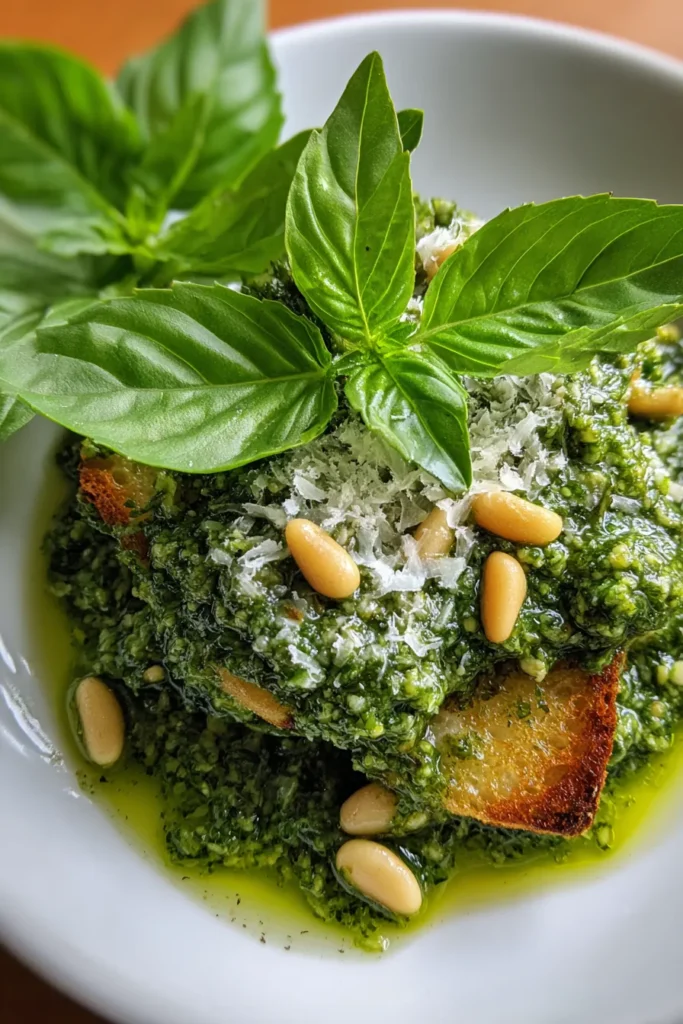

Classic Homemade Basil Pesto
Description
This homemade basil pesto bursts with the rich flavors of fresh basil, garlic, and Parmesan, making it a delightful addition to pasta, sandwiches, and more.
Ingredients
Instructions
-
Place the basil leaves and pine nuts into a food processor. Pulse several times until the ingredients are roughly chopped.
-
Add the minced garlic to the processor. Pulse a few more times to mix the ingredients together.
-
Slowly add the Parmesan-Reggiano cheese and pulse a few times. Ensure the cheese is completely incorporated.
-
While the food processor is running, slowly drizzle the extra virgin olive oil into the mixture. Blend until the pesto reaches your desired consistency.
-
Stop the processor and taste the pesto. Add salt and freshly ground black pepper to taste. Pulse again a couple of times to mix evenly.
-
Transfer the pesto to an airtight container and store it in the refrigerator until you're ready to use it.
Note
- To prevent browning, keep a thin layer of olive oil on top of the pesto while storing.
- Pesto can be frozen for up to three months. Use ice cube trays for convenient portioning.
- Experiment with different nuts, such as walnuts or almonds, for a unique flavor twist.
- You can also add a squeeze of lemon juice to the pesto for a zesty tang.
- This pesto is perfect as a pasta sauce, sandwich spread, or a topping for grilled chicken or fish.

