

There’s a special kind of excitement that bubbles up when you’re about to create a Rich Aged Italian Cheese Board. It’s not just about stacking wedges of cheese; it’s about crafting an experience that brings together friends, family, and flavors that have been perfected over generations. This elegant cheese board, perfect for gatherings or a cozy night at home, showcases the deep, complex notes of Parmigiano-Reggiano alongside the tangy bite of Pecorino Romano. As you arrange each element—soft Taleggio, bold Provolone Piccante, silky Gorgonzola Dolce—you’re orchestrating a symphony of textures and tastes that dance across the palate.
Every element tells a story: the way honey pools beside salty shards of cheese, the pop of olives contrasting with the chew of dried figs, the gentle aroma of rosemary weaving everything together. Whether you’re hosting a shower of compliments at your next dinner party or simply indulging in an at-home tasting for two, this board invites you to slow down and savor each bite. As someone who first fell in love with Italian cheeses during a sun-drenched afternoon in Tuscany, I can confidently say that bringing these aged treasures into your kitchen will elevate any moment—from a laid-back wine night to a festive holiday spread.
I’ve laid out all the details you need to recreate this indulgent appetizer, from the creamy tang of Gorgonzola Dolce to the crystalline crunch of Parmigiano-Reggiano aged 24 months. You’ll see how simple techniques—like fanning thin wedges or folding prosciutto—can transform ordinary ingredients into a beautiful centerpiece. By the end of this article, you’ll not only know what goes on the board but why each ingredient shines, how to arrange everything with artistic flair, and the best ways to store any leftovers. So grab your favorite wooden or marble board, let’s dive into the world of Rich Aged Italian Cheese—and don’t forget to share your own stories and tweaks along the way!
KEY INGREDIENTS IN RICH AGED ITALIAN CHEESE BOARD
To build a cheese board that truly captures the spirit of Italy, you’ll need a finely curated selection of cheeses, meats, fruits, nuts, and accouterments. Each ingredient plays its role, contributing unique texture, flavor, and visual appeal to your spread.
- Parmigiano-Reggiano
This 24-month-aged king of cheeses brings a crystalline, granular crunch and deep umami notes. Break it into rough chunks to highlight its rustic character and let guests pair it with sweet honey for the perfect sweet-savory balance.
- Pecorino Romano
A sheep’s milk cheese aged 12 months, offering a sharper, saltier bite. Thin wedges accentuate its firm texture, making it a stand-out companion to dried fruits like figs and apricots.
- Gorgonzola Dolce
Creamy, slightly sweet, and less tangy than traditional blue cheeses. Its soft texture is ideal for spreading on crackers or breadsticks, adding a luscious layer of flavor that’s approachable for all palates.
- Taleggio
A semi-soft cheese known for its mild aroma and rich, buttery mouthfeel. Cut into small rectangles, it creates a creamy contrast that invites guests to explore different combinations.
- Provolone Piccante
This aged variety brings a sharp, piquant edge. The firm texture and robust flavor make it a perfect counterpoint to milder cheeses and a delightful pairing with a robust red wine.
- Italian salami or prosciutto
Thinly sliced and folded into delicate ribbons or rolls, these cured meats add a savory, salty depth that complements the cheeses and invites nibbling throughout the evening.
- Assorted Italian olives
A mix of green and black olives introduces a briny, slightly bitter note that cuts through the richness and cleanses the palate between bites.
- Dried figs
Their chewy sweetness brings a little burst of sunshine, providing a luscious foil to the saltier elements on the board.
- Dried apricots
Vibrant in color and tangy-sweet in taste, they offer a chewier texture that balances the creaminess of soft cheeses.
- Marcona almonds
Buttery, lightly salted nuts that deliver a satisfying crunch and nutty richness, perfect for punctuating every mouthful.
- Honey
Drizzled or served in a small bowl with a honey dipper, it’s the golden thread that ties sweet and savory together, especially with aged Parmigiano-Reggiano.
- Fresh rosemary sprigs
Tucked around the board, rosemary adds a fragrant herbal touch that elevates the entire presentation and invites guests to breathe in a hint of Mediterranean air.
- Assorted Italian crackers or breadsticks
These crunchy carriers provide the perfect vehicle for soft and hard cheeses alike, ensuring every bite has a foundation.
HOW TO MAKE RICH AGED ITALIAN CHEESE BOARD
Creating this cheese board is as much about the joy of assembly as it is about the flavors themselves. With a few simple steps, you’ll have an eye-catching spread that caters to both the beginner and the seasoned host.
1. Begin by preparing a large wooden or marble board. Ensure it’s clean and dry, then choose spots across the surface to anchor your cheeses. Think about hard, semi-soft, and soft textures to create visual interest and varied mouthfeel.
2. Start with the Parmigiano-Reggiano; using your hands or a sturdy knife, break it into rough chunks. Place these golden shards in one corner, letting their rugged edges showcase the cheese’s crystalline structure.
3. Slice the Pecorino Romano and Provolone Piccante into thin, uniform wedges with a sharp knife. Fan them out side by side near the Parmigiano-Reggiano, creating a dynamic gradient of color and shape.
4. Cut the Gorgonzola Dolce and Taleggio into small squares or rectangles. Position these creamy cheeses near the center of the board so guests can easily reach them with spreading knives or small spoons.
5. Arrange slices of Italian salami or prosciutto close to the cheeses. Fold each slice into neat, bite-sized portions, offering a balance of meat and cheese in every serving.
6. Strategically place small bowls of olives and marcona almonds around the board. These containers add height variation and make it easy for guests to grab a mix of textures in one go.
7. Fill any remaining gaps with dried figs, dried apricots, and marcona almonds. Scatter these items artfully to disperse pops of color and create an enticing mosaic across the board.
8. Pour the honey into a small dish or ramekin and include a honey dipper. Position this near the Parmigiano-Reggiano so visitors can drizzle amber sweetness over savory bites.
9. Tuck sprigs of fresh rosemary around clusters of cheese and fruit. The aromatic herbs infuse a subtle pine-like fragrance that elevates the entire board.
10. Finally, add assorted Italian crackers or breadsticks around the outer edge. This framing layer ensures guests have crisp vehicles to pair with every cheese, fruit, and drizzled honey combination.
SERVING SUGGESTIONS FOR RICH AGED ITALIAN CHEESE BOARD
To truly shine, this cheese board deserves a thoughtful serving approach. Presentation, temperature, and pairing can all elevate your guests’ tasting adventure. Aim to serve the board at room temperature, allowing each cheese’s flavors and aromas to fully develop. Provide small plates and cheese knives so everyone can experiment with their favorite combinations. Offer pairing suggestions like a bold Chianti, a velvety Barolo, or even a sparkling Prosecco to complement the variety of textures and tastes. Encourage guests to sample cheeses with fruits and nuts in a single bite—this mingling of flavors highlights the balance of sweet, salty, creamy, and tangy notes.
- Encourage room-temperature service by removing the board from the fridge 30 minutes before your gathering. Warmed cheeses release more flavor and become easier to spread and savor.
- Provide a selection of wine pairings such as Chianti for Parmigiano-Reggiano, a crisp white like Pinot Grigio for Gorgonzola Dolce, or a sparkling Prosecco to cleanse the palate.
- Offer small tasting notes on folded index cards next to each cheese, sharing a fun fact or a suggested pairing to spark conversation.
- Serve with wooden picks or toothpicks alongside the bowls of olives and nuts, ensuring a tidy, hands-free experience as guests graze.
HOW TO STORE RICH AGED ITALIAN CHEESE BOARD
Storing your cheese board components properly is key to preserving their distinct flavors for future snacking sessions. While cured meats and cheeses each have unique storage needs, caring for them correctly can extend their shelf life and maintain their textural integrity. Cheese should be wrapped in breathable cheese paper or parchment to allow just enough airflow, preventing excess moisture buildup. Nuts and dried fruits fare better in airtight containers stored in a cool, dark pantry. Honey, once opened, remains stable at room temperature in a sealed jar. Always store meats like prosciutto in the coldest part of your refrigerator and consume within their recommended time frame. By separating elements into their ideal environments, you’ll ensure every bite stays as fresh and flavorful as the day you first set out your board.
- Wrap each cheese in parchment or cheese paper before sealing lightly in plastic wrap. This method allows the cheese to breathe and helps regulate humidity.
- Store cured meats in airtight containers or resealable bags on the bottom shelf of the fridge, where temperatures are most consistent.
- Keep dried fruits and nuts in sealed jars or containers at room temperature, away from direct sunlight and heat sources.
- Return honey to a cool, dry pantry, ensuring the lid is tightly secured to prevent crystallization and humidity intrusion.
CONCLUSION
Bringing together a Rich Aged Italian Cheese Board is more than just assembling food—it’s crafting a moment of shared delight. We’ve explored every layer of this elegant appetizer, from the tangy depths of Pecorino Romano to the creamy whispers of Taleggio, and from the earthy crunch of marcona almonds to the luscious sweetness of dried figs and honey. You’ve learned how to arrange each component with visual flair, how to suggest the perfect wine pairings, and how to store leftovers so that every element stays inviting and delicious. This guide is designed to stand alone, ready for you to print and save as a reference for all your future gatherings. Whether you’re planning a casual movie night, a festive holiday spread, or a sophisticated wine-and-cheese evening, these tips and techniques will serve you well. Don’t forget there’s a FAQ section below where you can find quick answers to common questions.
I’d love to hear how your cheese board adventure goes—whether you added a surprise ingredient, discovered a new favorite pairing, or simply enjoyed the process of creating something beautiful for your loved ones. Feel free to leave comments, share your own personal stories, or ask any questions if you need a bit more guidance. Your feedback and experiences help us all become better hosts and more adventurous home cooks. Buon appetito, and may your next gathering be filled with laughter, good company, and, of course, an unforgettable cheese board!
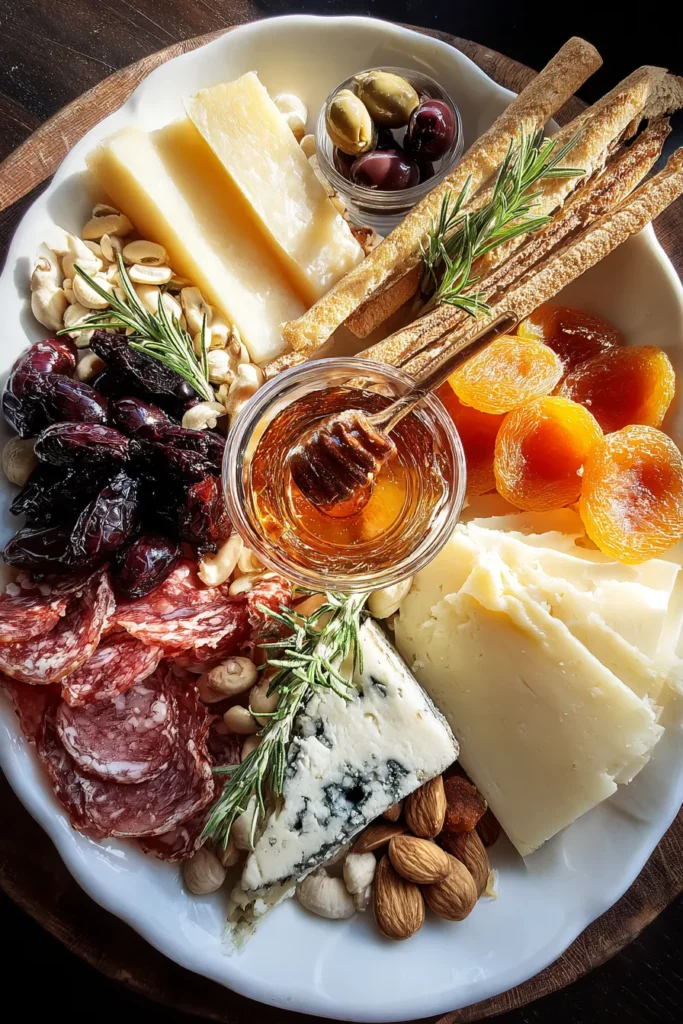

Rich Aged Italian Cheese Board
Description
Crafted with a variety of aged Italian cheeses, salty prosciutto, and sweet dried fruits, this cheese board promises a delightful culinary adventure with each bite.
Ingredients
Instructions
-
Begin by preparing a large wooden or marble board. Arrange the cheeses at different points on the board, ensuring a good mix of hard, semi-soft, and soft textures.
-
Start with the Parmigiano-Reggiano; break it into rough chunks and place it in one corner of the board.
-
Slice the Pecorino Romano and Provolone Piccante into thin wedges and fan them out near the Parmigiano-Reggiano.
-
Cut the Gorgonzola Dolce and Taleggio into small squares or rectangles. Arrange these creamy cheeses near the center for easy access with spreading knives.
-
Arrange slices of Italian salami or prosciutto near the cheeses, folding them into small, manageable portions.
-
Strategically place small bowls of olives and nuts around the board for variety and texture.
-
Fill any gaps with dried figs, dried apricots, and marcona almonds, dispersing the colors and shapes artistically.
-
Pour the honey into a small dish or bowl and place it alongside the cheeses with a honey dipper.
-
Tuck fresh rosemary sprigs around the board for an aromatic touch.
-
Add assorted Italian crackers or breadsticks around the edge of the board to complement the cheeses.
Note
- Parmigiano-Reggiano's crystalline texture pairs excellently with honey.
- Pecorino Romano is a salty delight that goes well with dried fruits.
- Gorgonzola Dolce is milder than traditional Gorgonzola, making it versatile for many palates.
- Taleggio offers a creamy contrast, ideal for spreading on crackers.
- Provolone Piccante brings a sharp and bold dimension to the board.
- Pair your board with a bold Italian red wine like Chianti or Barolo.
- Experiment with additional elements like balsamic glaze or sun-dried tomatoes for variety.

