
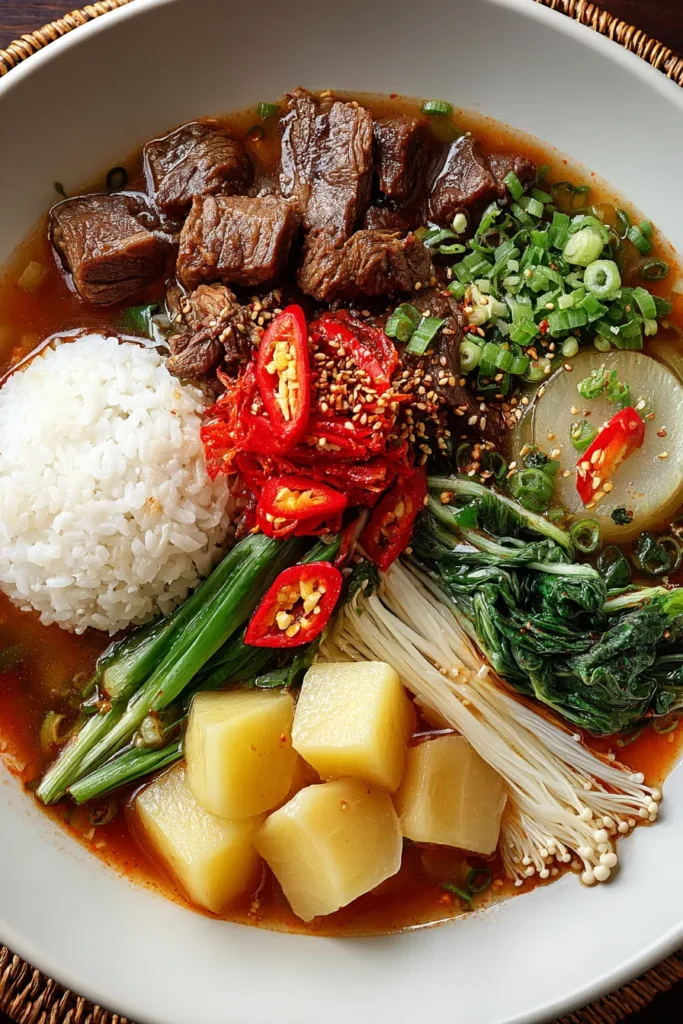
There’s something so soul-soothing about diving into a bowl brimming with rich, savory broth that wraps around you like a cozy blanket on a frigid evening. Korean Winter Soup is one of those heartwarming traditions that instantly transports you to a snug, fireside kitchen where laughter and chatter flow as freely as the steam rising off a simmering pot. Each component—from the tender ribbons of beef brisket to the silky cubes of tofu—plays a starring role in crafting a soup that’s both hearty and nuanced. The interplay between the mild sweetness of napa cabbage and the subtle heat of gochujang makes every spoonful feel like a comforting hug, warming you right down to your bones. While cooking, you’ll notice how the gentle trickle of bubbles and the faint aroma of ginger and garlic subtly transform your kitchen into a winter wonderland of tantalizing scents. It’s these little sensory moments that make preparing Korean Winter Soup feel less like a recipe and more like a cherished ritual.
Beyond its comforting nature, this soup is a testament to the beauty of simplicity meeting depth. You don’t need dozens of exotic spices to create complexity; a handful of humble pantry staples come together in a symphony of flavors that feels both familiar and delightfully surprising. The Korean radish lends a gentle sweetness and firm bite, while a drizzle of sesame oil introduces that unmistakable toasty note that keeps you coming back for more. And let’s not forget the magic of simmering time: those long, low bubbles coax out every bit of richness from the beef and aromatics, creating a broth so clear and flavorful you’ll find yourself ladling it straight into a mug. On chilly days, nothing beats gathering around the table with steaming bowls of this soup, sharing stories and stealing the occasional garnish off a friend’s bowl. Whether you’re a seasoned home cook or just embarking on your culinary journey, Korean Winter Soup promises a kitchen adventure that’s as rewarding as the delicious payoff waiting at the finish line.
To achieve that perfect balance of savory broth, tender meat, and vibrant veggies, each ingredient in Korean Winter Soup has an essential role. Below are the stars that make this dish unforgettable:
Before diving into the step-by-step process, let’s talk about how you’ll build layers of flavor in this hearty soup. You’ll begin by creating a rich beef broth, then clarify it for a crystal-clear base. Next, you’ll add vegetables and seasonings in stages to ensure each ingredient cooks just right. Finally, tofu and mushrooms join the party for a finishing touch. Follow these steps closely for the ultimate cozy bowl of warmth:
1. In a large pot, combine beef brisket, water, onion, garlic, and ginger. Bring to a boil over high heat, then immediately reduce the heat to low, cover, and simmer for about 1.5 to 2 hours until the beef is tender.
2. Use a spoon or skimmer to skim off any foam that rises to the surface during cooking. This step is crucial for maintaining a clear broth.
3. Carefully remove the beef from the pot and shred it into bite-sized pieces using forks or tongs. Set the meat aside on a plate.
4. Strain the broth through a fine-mesh sieve, discarding all solids, and return the clarified liquid to the pot.
5. Add the sliced Korean radish and continue to simmer for another 15 minutes, or until the radish is nicely tender but still holds its shape.
6. Stir in the chopped green onions, soy sauce, sesame oil, and gochujang. Mix well to combine all the flavors evenly throughout the broth.
7. Taste and season with salt and pepper as needed, adjusting the balance of umami, saltiness, and spice.
8. Gently slide in the tofu cubes, napa cabbage, and enoki mushrooms. Let them simmer for about 5 minutes until they’re warmed through and tender.
9. Return the shredded beef to the pot, stirring gently until it’s heated through. Do a final taste check and adjust seasoning if necessary.
10. Ladle the soup into bowls, serve with a side of cooked rice, and garnish with sliced red chili and extra green onions for a vibrant finish.
Bringing Korean Winter Soup to the table is a dinner party win, family-night staple, or cozy solo treat. This section will guide you through four imaginative ways to present your steaming bowls for maximum enjoyment. Whether you’re aiming for Instagram-worthy flair or laid-back comfort, these serving ideas will elevate your meal and spark conversation around the dining table.
Once you’ve savored that first bowl of Korean Winter Soup, you’ll be thrilled to know that the flavors often deepen over time. Proper storage is key to preserving the broth’s clarity and the ingredients’ textures. Cooling the soup safely before refrigerating or freezing ensures food safety while maintaining peak flavor. Here are four tried-and-true methods for storing your soup so it tastes just as amazing on Day Two—or even Day Ten.
As you’ve experienced throughout this guide, Korean Winter Soup is more than just a hearty meal—it’s a culinary journey that brings warmth, flavor, and a touch of Korean tradition into your home. From the initial sizzle as you boil beef brisket and aromatic ginger to the final flourish of sliced red chilies and fresh green onions, each step fosters a deeper appreciation for the art of slow cooking. Armed with clear, savory broth and tender ingredients, you’ll find that this dish becomes even more comforting as the days go by, making it perfect for meal prep and family gatherings. Explore the Intermediate difficulty level with confidence, knowing that the 20 minutes of prep and 2 hours of cooking reward you with a soul-warming soup that clocks in at around 450 calories per serving and yields four generous bowls of winter comfort.
Feel free to print this article and save it in your recipe binder for those frosty afternoons when you crave something truly special. You’ll also find a handy FAQ section below to answer any lingering questions you may have. If you’ve tried the recipe, I’d love to hear about your experience—did the gochujang hit just the right spice? How did your family react to the deep, beefy broth? Drop your comments, questions, or feedback so I (and fellow home cooks) can celebrate your successes or help troubleshoot any challenges. Happy cooking, and may every spoonful of Korean Winter Soup bring warmth and joy to your table!
This Korean Winter Soup features tender beef, vibrant veggies, and a rich, savory broth that's perfect for cozy nights. Each spoonful warms the soul with its delightful flavors.

Ciao, beautiful souls! I'm Isabella Romano, and welcome to my kitchen where comfort meets creativity, and every recipe is designed to make your everyday cooking feel a little more special.