

There’s something so soul-soothing about diving into a bowl brimming with rich, savory broth that wraps around you like a cozy blanket on a frigid evening. Korean Winter Soup is one of those heartwarming traditions that instantly transports you to a snug, fireside kitchen where laughter and chatter flow as freely as the steam rising off a simmering pot. Each component—from the tender ribbons of beef brisket to the silky cubes of tofu—plays a starring role in crafting a soup that’s both hearty and nuanced. The interplay between the mild sweetness of napa cabbage and the subtle heat of gochujang makes every spoonful feel like a comforting hug, warming you right down to your bones. While cooking, you’ll notice how the gentle trickle of bubbles and the faint aroma of ginger and garlic subtly transform your kitchen into a winter wonderland of tantalizing scents. It’s these little sensory moments that make preparing Korean Winter Soup feel less like a recipe and more like a cherished ritual.
Beyond its comforting nature, this soup is a testament to the beauty of simplicity meeting depth. You don’t need dozens of exotic spices to create complexity; a handful of humble pantry staples come together in a symphony of flavors that feels both familiar and delightfully surprising. The Korean radish lends a gentle sweetness and firm bite, while a drizzle of sesame oil introduces that unmistakable toasty note that keeps you coming back for more. And let’s not forget the magic of simmering time: those long, low bubbles coax out every bit of richness from the beef and aromatics, creating a broth so clear and flavorful you’ll find yourself ladling it straight into a mug. On chilly days, nothing beats gathering around the table with steaming bowls of this soup, sharing stories and stealing the occasional garnish off a friend’s bowl. Whether you’re a seasoned home cook or just embarking on your culinary journey, Korean Winter Soup promises a kitchen adventure that’s as rewarding as the delicious payoff waiting at the finish line.
KEY INGREDIENTS IN KOREAN WINTER SOUP
To achieve that perfect balance of savory broth, tender meat, and vibrant veggies, each ingredient in Korean Winter Soup has an essential role. Below are the stars that make this dish unforgettable:
- Beef brisket – The foundation of the broth, this cut delivers rich, beefy depth as it simmers low and slow. When shredded, it adds hearty texture and protein.
- Water – The canvas for all flavors, high-quality water ensures a clean, clear soup base that lets every ingredient shine.
- Onion – Offering subtle sweetness and umami, quartered onion infuses gentle flavor without overpowering the broth.
- Garlic – Crushed to release maximum aroma, garlic brings a warm spiciness that underscores the savory broth.
- Ginger – Sliced thin, ginger adds a bright, peppery warmth and helps balance the richness of the beef.
- Korean radish – Known as Mu, this root vegetable soaks up the broth’s flavor and provides a tender crunch that contrasts beautifully with soft tofu and meat.
- Green onions – Chopped and stirred in toward the end, they add a fresh, oniony brightness and hint of color.
- Soy sauce – Deepens the umami profile and brings a gentle saltiness that harmonizes all elements.
- Sesame oil – A pop of nutty richness that’s best added late to preserve its aromatic qualities.
- Gochujang – The Korean red chili paste adds subtle heat, color, and a touch of sweetness for complexity.
- Salt and pepper – Simple seasonings that allow you to adjust the final taste to your personal preference.
- Firm tofu – Cubed tofu lends a tender, silky texture and soaks up the flavorful broth beautifully.
- Napa cabbage – Softens quickly in the hot liquid, contributing a mild, leafy sweetness and light crunch.
- Enoki mushrooms – With their delicate stems and tiny caps, they soak up broth and deliver an earthy bite that’s pure comfort.
- Cooked rice – The perfect side to scoop into the bowl, rice turns each spoonful into a meal that sticks to your ribs.
- Sliced red chili and green onions (garnish) – A vibrant finishing touch that brightens the presentation and adds a fresh kick.
HOW TO MAKE KOREAN WINTER SOUP
Before diving into the step-by-step process, let’s talk about how you’ll build layers of flavor in this hearty soup. You’ll begin by creating a rich beef broth, then clarify it for a crystal-clear base. Next, you’ll add vegetables and seasonings in stages to ensure each ingredient cooks just right. Finally, tofu and mushrooms join the party for a finishing touch. Follow these steps closely for the ultimate cozy bowl of warmth:
1. In a large pot, combine beef brisket, water, onion, garlic, and ginger. Bring to a boil over high heat, then immediately reduce the heat to low, cover, and simmer for about 1.5 to 2 hours until the beef is tender.
2. Use a spoon or skimmer to skim off any foam that rises to the surface during cooking. This step is crucial for maintaining a clear broth.
3. Carefully remove the beef from the pot and shred it into bite-sized pieces using forks or tongs. Set the meat aside on a plate.
4. Strain the broth through a fine-mesh sieve, discarding all solids, and return the clarified liquid to the pot.
5. Add the sliced Korean radish and continue to simmer for another 15 minutes, or until the radish is nicely tender but still holds its shape.
6. Stir in the chopped green onions, soy sauce, sesame oil, and gochujang. Mix well to combine all the flavors evenly throughout the broth.
7. Taste and season with salt and pepper as needed, adjusting the balance of umami, saltiness, and spice.
8. Gently slide in the tofu cubes, napa cabbage, and enoki mushrooms. Let them simmer for about 5 minutes until they’re warmed through and tender.
9. Return the shredded beef to the pot, stirring gently until it’s heated through. Do a final taste check and adjust seasoning if necessary.
10. Ladle the soup into bowls, serve with a side of cooked rice, and garnish with sliced red chili and extra green onions for a vibrant finish.
SERVING SUGGESTIONS FOR KOREAN WINTER SOUP
Bringing Korean Winter Soup to the table is a dinner party win, family-night staple, or cozy solo treat. This section will guide you through four imaginative ways to present your steaming bowls for maximum enjoyment. Whether you’re aiming for Instagram-worthy flair or laid-back comfort, these serving ideas will elevate your meal and spark conversation around the dining table.
- Family-Style Communal Feast: Place the pot at the center of the table and let everyone ladle soup into their own bowls. Offer extra small dishes of sliced red chili, chopped green onions, and sesame seeds so guests can customize their bowls.
- Minimalist Bowl Presentation: For a modern, clean look, serve soup in wide, shallow bowls. Neatly arrange shredded beef on one side and tofu and mushrooms on the other, then drizzle a thin line of sesame oil across the surface for a sleek finishing touch.
- Fusion-Style Pairing: Pair the soup with a side of buttery garlic bread or crusty baguette to soak up the broth, giving a delightful East-meets-West twist. Top the bread with a light spread of gochujang-butter for an extra kick.
- Rustic Winter Platter: Arrange bowls of rice, kimchi, and pickled veggies around the soup. Use a wooden board or tray for serving, and tuck in a small stone pot of bubbly rice to keep things hot, creating a warm, inviting experience.
HOW TO STORE KOREAN WINTER SOUP
Once you’ve savored that first bowl of Korean Winter Soup, you’ll be thrilled to know that the flavors often deepen over time. Proper storage is key to preserving the broth’s clarity and the ingredients’ textures. Cooling the soup safely before refrigerating or freezing ensures food safety while maintaining peak flavor. Here are four tried-and-true methods for storing your soup so it tastes just as amazing on Day Two—or even Day Ten.
- Refrigerate in Airtight Containers: Allow the soup to cool to room temperature, then transfer it into airtight glass or BPA-free plastic containers. Store in the refrigerator for up to 4 days. Keeping the broth and solids together helps the flavors meld further.
- Freeze in Portion Cups: For longer storage, ladle soup into individual freezer-safe containers or heavy-duty freezer bags, leaving about an inch of headspace. Label with the date, and freeze for up to 3 months. Thaw overnight in the fridge and reheat gently on the stove.
- Separate Solid Ingredients: If you’re concerned about tofu or mushrooms becoming too soft after freezing, store the broth separately from the solids. Freeze the broth alone, and refrigerate the veggies and meat for up to 4 days. Combine and warm together just before serving.
- Reheating Tips for Freshness: Thaw frozen soup in the refrigerator or in a pot over low heat. Bring to a gentle simmer, stirring occasionally, and add a splash of water or extra soy sauce if the flavors need a little boost. Garnish freshly to restore that just-made appeal.
CONCLUSION
As you’ve experienced throughout this guide, Korean Winter Soup is more than just a hearty meal—it’s a culinary journey that brings warmth, flavor, and a touch of Korean tradition into your home. From the initial sizzle as you boil beef brisket and aromatic ginger to the final flourish of sliced red chilies and fresh green onions, each step fosters a deeper appreciation for the art of slow cooking. Armed with clear, savory broth and tender ingredients, you’ll find that this dish becomes even more comforting as the days go by, making it perfect for meal prep and family gatherings. Explore the Intermediate difficulty level with confidence, knowing that the 20 minutes of prep and 2 hours of cooking reward you with a soul-warming soup that clocks in at around 450 calories per serving and yields four generous bowls of winter comfort.
Feel free to print this article and save it in your recipe binder for those frosty afternoons when you crave something truly special. You’ll also find a handy FAQ section below to answer any lingering questions you may have. If you’ve tried the recipe, I’d love to hear about your experience—did the gochujang hit just the right spice? How did your family react to the deep, beefy broth? Drop your comments, questions, or feedback so I (and fellow home cooks) can celebrate your successes or help troubleshoot any challenges. Happy cooking, and may every spoonful of Korean Winter Soup bring warmth and joy to your table!
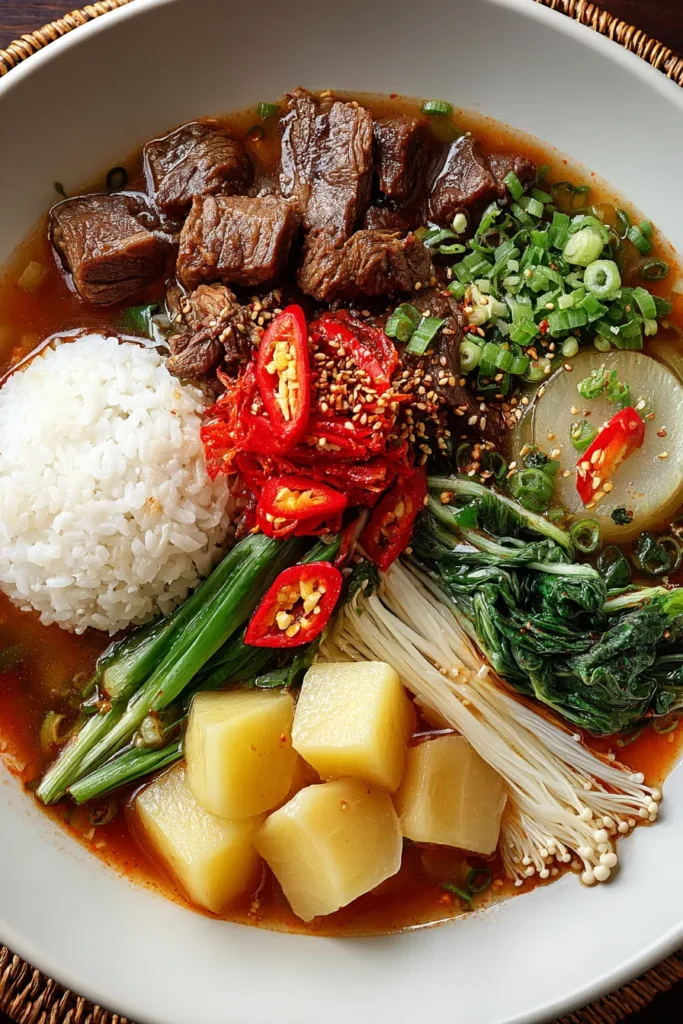

Korean Winter Soup
Description
This Korean Winter Soup features tender beef, vibrant veggies, and a rich, savory broth that's perfect for cozy nights. Each spoonful warms the soul with its delightful flavors.
Ingredients
Instructions
-
In a large pot, combine beef brisket, water, onion, garlic, and ginger. Bring to a boil over high heat. Once boiling, reduce the heat to low, cover, and simmer for about 1.5 to 2 hours until the beef is tender.
-
Skim off any foam that rises to the surface during cooking for a clear broth.
-
Remove the beef from the pot and shred it into bite-sized pieces. Set aside.
-
Strain the broth using a fine-mesh sieve, discarding the solids, and return the clear broth to the pot.
-
Add the sliced Korean radish and continue to simmer for another 15 minutes until the radish is tender.
-
Mix in the green onions, soy sauce, sesame oil, and gochujang. Stir well to combine.
-
Season with salt and pepper to taste.
-
Gently add the tofu, napa cabbage, and enoki mushrooms to the pot. Let them simmer until they are cooked through, about 5 minutes.
-
Return the shredded beef to the pot and heat through. Adjust seasoning, if necessary.
-
Serve the soup hot in bowls, with cooked rice on the side. Garnish with sliced red chili and green onions before serving.
Note
- Korean radish, also known as Mu, is a winter staple and adds depth to the soup.
- The soup gets better with time, and flavors deepen after a day.
- Gochujang adds a subtle heat and depth; adjust according to spice preference.
- Perfect for a cold day to warm you from the inside out.
- For a vegetarian version, omit beef and use vegetable broth.

