

Honey Lavender Cheesecake is a luscious dessert where honey’s sweetness meets soft lavender aroma atop a crunchy graham crust. Velvety cream cheese filling bathed in honey-infused lavender cream pours over a crispy base, creating a floral elegance perfect for special moments. Whether you’re celebrating or craving a dreamy treat, this cheesecake promises sweet, aromatic indulgence that lingers with every bite, an irresistible invitation to bring a slice of floral perfection into your kitchen.
Key Ingredients
Gathering the right ingredients ensures your Honey Lavender Cheesecake turns out irresistibly creamy with the perfect floral finish. Here’s what you’ll need:
- 200 grams graham cracker crumbs: Provides a crunchy base that complements the smooth filling.
- 50 grams granulated sugar: Sweetens and helps bind the crumb crust.
- 80 grams unsalted butter, melted: Binds the crust ingredients and adds rich flavor.
- 680 grams cream cheese, softened: Offers the velvety, tangy core of the cheesecake.
- 150 grams granulated sugar: Sweetens the cream cheese filling to balanced perfection.
- 3 large eggs: Set and stabilize the filling while adding richness.
- 120 milliliters sour cream: Adds a subtle tang and silky texture.
- 120 milliliters heavy cream: Infuses richness and smooth mouthfeel into the filling.
- 60 milliliters honey: Brings natural sweetness and floral depth.
- 1 tablespoon dried culinary lavender buds: Infuses the filling with delicate floral aroma.
- 1 teaspoon vanilla extract: Enhances flavors with warm, aromatic notes.
- Pinch salt: Balances sweetness and elevates flavors.
How To Make Honey Lavender Cheesecake
Creating this cheesecake involves two main stages: building a sturdy, buttery crust and crafting a smooth, honey-lavender-infused filling. You’ll bake the crust first, then gently steep lavender in a cream mixture, strain it, and blend it into your cream cheese base. A careful water bath bake and a gradual cooling process will ensure crack-free, melt-in-your-mouth slices. Follow each detailed step below to achieve cheesecake perfection.
1. Preheat the oven to 160°C and grease a 23 cm springform pan, then wrap the outside with aluminum foil. Ensuring the pan is well-lubricated with butter or cooking spray helps release the cheesecake later, and the foil acts as a barrier in the water bath.
2. In a bowl combine graham cracker crumbs, 50 grams sugar and melted butter, then press firmly into the bottom of the prepared pan. Use the base of a measuring cup to evenly compress the mixture, creating a uniform crust.
3. Bake the crust for 10 minutes, remove and let cool while you prepare the filling. This brief bake sets the crust so it holds together when you pour in the filling.
4. In a small saucepan heat heavy cream, sour cream, honey and lavender buds over medium heat until just steaming, then remove from heat and let steep for 15 minutes. Heating to a gentle steam helps release oils from the lavender without boiling, preserving its floral aroma.
5. Strain the cream mixture through a fine mesh sieve into a bowl, discarding the lavender buds. A fine sieve ensures no woody bits make it into your filling, keeping it silky.
6. In a large bowl beat cream cheese and 150 grams sugar until smooth, then add vanilla extract and pinch of salt and mix until combined. Using a stand mixer or hand mixer on medium speed yields a lump-free base.
7. Slowly pour the warm cream mixture into the cream cheese mixture while beating on low speed until smooth. Adding the warm liquid gradually prevents curdling and maintains a velvety texture.
8. Add eggs one at a time and beat just until incorporated, avoiding overmixing. Overbeating can incorporate excess air, increasing the risk of cracks.
9. Pour the filling over the cooled crust and tap the pan gently to release air bubbles. This helps eliminate pockets of air that could cause uneven baking.
10. Place the springform pan in a larger roasting pan and pour hot water into the roasting pan until it reaches halfway up the sides of the cheesecake pan. The water bath creates a humid oven environment that prevents the cheesecake from drying out.
11. Bake for 50 to 60 minutes or until the center is set but still slightly jiggly. A slight jiggle in the center indicates a perfect, creamy interior.
12. Turn off the oven, open the door slightly and let the cheesecake cool inside for 1 hour. Gradual cooling reduces temperature shock and helps prevent cracking.
13. Remove from the oven and water bath, then refrigerate for at least 4 hours or overnight before serving. Chilling fully allows the cheesecake to set completely and develop its flavors.
Serving Suggestions
Once your Honey Lavender Cheesecake is perfectly chilled and set, it’s time to elevate each slice with thoughtful accompaniments. Whether you’re hosting a tea party, celebrating a special occasion, or simply craving a floral dessert, these serving ideas ensure every bite shines with elegance and flavor.
- Drizzle with Honey: After slicing, lightly drizzle pure honey over each piece to enhance sweetness and create a glossy finish.
- Garnish with Fresh Lavender: Place a few fresh lavender sprigs atop each slice for a delicate floral aroma and visual appeal.
- Serve with Berries: Arrange a handful of mixed berries like raspberries and blueberries on the side to add bright color and tart contrast.
- Pair with Tea: Offer a pot of Earl Grey or chamomile tea to complement the cheesecake’s floral notes and balance its richness.
Tips For Perfect Honey Lavender Cheesecake
Mastering the Honey Lavender Cheesecake takes a bit of finesse, but these friendly tips will guide you to floral perfection. From selecting the right lavender buds to avoiding common baking pitfalls, each suggestion aims to simplify the process and elevate your result. Keep these tips in mind as you whisk, bake, and chill—soon you’ll be unveiling a cheesecake that’s as beautiful to look at as it is to taste.
- Use fine culinary lavender to avoid woody bits and ensure a smooth floral flavor.
- Wrapping the pan in foil prevents water seeping into the cheesecake during the water bath bake.
- Do not overbake; the center should still wobble slightly to avoid cracks.
- Serve with a light drizzle of honey and optional fresh lavender sprigs for garnish.
How To Store It
After enjoying that first heavenly slice of Honey Lavender Cheesecake, proper storage will preserve its creamy texture and floral aroma for days. Whether you’re tucking away extra slices for tomorrow’s dessert or preparing ahead for a gathering, following the right technique ensures every piece remains velvety and fragrant. Start by wrapping each slice individually or covering the whole cheesecake to shield it from air and odors. When you’re ready to serve, simply remove the cheesecake from the refrigerator a few minutes before plating to let its honey-lavender notes gently bloom once again.
- Refrigerate Whole: Cover the cheesecake with plastic wrap or an airtight lid and store on a flat shelf away from strong-smelling foods for up to 5 days.
- Individual Slices: Wrap each slice in parchment paper and then in plastic wrap, so you can grab a portion without exposing the rest.
- Airtight Container: Place slices in a sealed container with a piece of parchment between layers to prevent sticking and moisture loss.
- Room Temperature Serving: Before serving leftovers, let the cheesecake sit at room temperature for 15–20 minutes to revive its texture and aroma.
Frequently Asked Questions
Here are some quick answers to common questions about baking and enjoying your Honey Lavender Cheesecake:
- Q: How long does it take from start to serving this Honey Lavender Cheesecake?
A: You’ll need about 20 minutes for crust prep and baking, 15 minutes for steeping the lavender, 20 minutes for mixing the filling, then 50–60 minutes baking, 1 hour cooling in the oven with the door ajar, and at least 4 hours (or overnight) chilling in the refrigerator. In total, plan for around 6 to 7 hours from start to serving.
- Q: Why do I steep the dried lavender buds in the cream mixture and then strain them?
A: Steeping the lavender in the heated heavy cream, sour cream, and honey allows the floral oils to infuse fully into the dairy, giving a smooth, fragrant flavor. Straining through a fine mesh sieve removes all woody bits and buds, ensuring a silky, uniform filling without gritty or bitter pieces.
- Q: What are the best techniques to prevent cracks and ensure a velvety cheesecake texture?
A: Avoid overmixing once the eggs are added—beat just until incorporated. Bake in a water bath to maintain gentle, even heat around the pan. Pull the cheesecake when the center still jiggles slightly, then cool it gradually—first in the oven with the door cracked for an hour, then at room temperature briefly before refrigerating. These steps minimize temperature shock and cracking.
- Q: How do I set up and use the water bath correctly for this recipe?
A: Wrap the springform pan’s exterior in heavy-duty aluminum foil to seal out moisture. Place the wrapped pan in a larger roasting pan, pour in hot water until it reaches halfway up the sides of the cheesecake pan, then bake as directed. The hot water bath provides consistent, humid heat that prevents the crust from drying out and the filling from baking too quickly.
- Q: Why is it important to wrap the springform pan in aluminum foil?
A: Wrapping the pan prevents any water from the water bath seeping into the crust or filling, which would make the cheesecake soggy. A tight seal ensures the water bath’s gentle heat moves around the pan without introducing moisture directly into the cheesecake.
- Q: Can I substitute any ingredients or make adjustments without compromising the result?
A: You can swap graham cracker crumbs for another light cookie crumb if you prefer, though flavor and texture may vary. Use fine culinary lavender only—fresh lavender or coarse buds can be too woody. You may lightly adjust honey sweetness by 10–15 mL but avoid major changes to cream cheese, sugar, or dairy ratios, as they’re crucial for the proper structure and creamy texture.
What Makes This Special
This Honey Lavender Cheesecake truly shines thanks to its dreamy blend of creamy, tangy cheese, silky honey-sweetness, and delicate lavender aroma—all resting on a perfectly crisp graham crust. The magic happens in the gentle water bath bake and gradual cooling, giving each slice a crack-free, melt-in-your-mouth texture that will have everyone swooning. Don’t let it slip away: print and save this article, so you can revisit these floral dessert details whenever inspiration strikes. If you give it a go or have any questions, drop a comment below—I’d love to hear how your lavender-infused creation turned out!
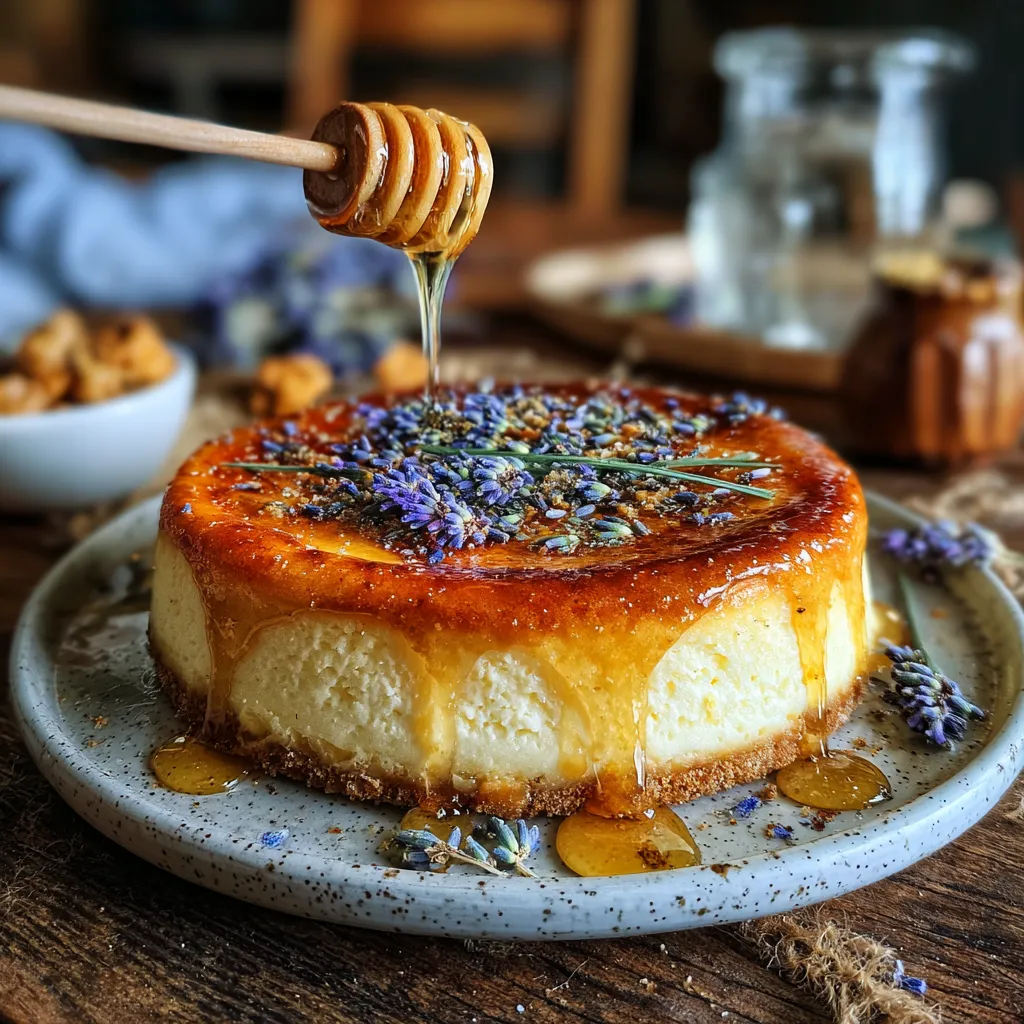

Honey Lavender Cheesecake
Description
Velvety cream cheese filling bathed in honey-infused lavender cream pours over a crispy graham crust. Warm floral aromas rise as each bite melts into a sweet, aromatic indulgence that lingers softly.
Ingredients
Instructions
-
Preheat the oven to 160°C and grease a 23 cm springform pan, then wrap the outside with aluminum foil.
-
In a bowl combine graham cracker crumbs, 50 grams sugar and melted butter, then press firmly into the bottom of the prepared pan.
-
Bake the crust for 10 minutes, remove and let cool while you prepare the filling.
-
In a small saucepan heat heavy cream, sour cream, honey and lavender buds over medium heat until just steaming, then remove from heat and let steep for 15 minutes.
-
Strain the cream mixture through a fine mesh sieve into a bowl, discarding the lavender buds.
-
In a large bowl beat cream cheese and 150 grams sugar until smooth, then add vanilla extract and pinch of salt and mix until combined.
-
Slowly pour the warm cream mixture into the cream cheese mixture while beating on low speed until smooth.
-
Add eggs one at a time and beat just until incorporated, avoiding overmixing.
-
Pour the filling over the cooled crust and tap the pan gently to release air bubbles.
-
Place the springform pan in a larger roasting pan and pour hot water into the roasting pan until it reaches halfway up the sides of the cheesecake pan.
-
Bake for 50 to 60 minutes or until the center is set but still slightly jiggly.
-
Turn off the oven, open the door slightly and let the cheesecake cool inside for 1 hour.
-
Remove from the oven and water bath, then refrigerate for at least 4 hours or overnight before serving.
Note
- Use fine culinary lavender to avoid woody bits and ensure a smooth floral flavor.
- Wrapping the pan in foil prevents water seeping into the cheesecake during the water bath bake.
- Do not overbake; the center should still wobble slightly to avoid cracks.
- Serve with a light drizzle of honey and optional fresh lavender sprigs for garnish.

