

Halibut with Zesty Lemon Beurre Blanc delivers a bright twist on pan-seared halibut, topped with a velvety lemon-infused beurre blanc that dances between tangy and buttery. Flaky, golden fillets get bathed in a creamy sauce enriched with tangy lemon juice and cold butter, offering a smooth, citrus-kissed finish that elevates every forkful. If you’re craving a seafood star for dinner that feels both elegant and approachable, this recipe is your new go-to—let’s dive in!
Key Ingredients
To create this vibrant seafood entrée, you’ll need a handful of simple, high-quality ingredients that shine through in every bite:
- 4 fillets halibut (6 oz each): Lean, flaky fish that is the star of this dish, providing a mild backdrop for the vibrant sauce.
- 1 tablespoon olive oil: Helps achieve a crisp, golden sear on the halibut.
- Salt to taste: Enhances the natural flavor of the fish.
- Black pepper to taste: Adds a touch of heat and depth.
- 1/4 cup shallots finely chopped: Delicate allium that infuses the sauce with subtle sweetness.
- 1/2 cup dry white wine: Introduces acidity and complexity, helping to deglaze the pan.
- 1/4 cup lemon juice: Delivers bright citrus notes that cut through the richness.
- 1 tablespoon lemon zest: Concentrates lemon flavor and adds aromatic oils.
- 1/2 cup heavy cream: Provides a creamy base that balances the acidity.
- 8 tablespoons unsalted butter cold and cut into pieces: Creates a smooth, emulsified sauce when whisked in gradually.
- White pepper to taste: Offers a gentle pungency without visible specks.
How To Make Halibut with Zesty Lemon Beurre Blanc
This recipe combines straightforward searing techniques with a classic French sauce method—beurre blanc—so you’ll feel like a pro even if you’re new to emulsified sauces. The key is controlling heat and whisking steadily to build a glossy, velvety finish. Follow these steps for restaurant-quality results:
1. Pat halibut fillets dry with paper towels and season both sides evenly with salt and black pepper to enhance flavor and ensure a good sear.
2. Heat olive oil in a nonstick skillet over medium-high heat until the oil shimmers, ensuring the pan is hot before adding the fish.
3. Sear the fillets for 4 minutes per side, undisturbed, until the edges turn opaque and the exterior develops a golden brown crust, then carefully transfer to a warm plate.
4. Add finely chopped shallots, dry white wine, fresh lemon juice, and lemon zest to the same skillet and bring the mixture to a gentle simmer, scraping up any browned bits.
5. Reduce the liquid until only about 2 tablespoons remain, concentrating the flavors before the next steps.
6. Stir in heavy cream and lower the heat to low to prevent the sauce from boiling when the butter is added.
7. Gradually whisk in cold butter pieces, a few at a time, until the sauce becomes smooth and emulsified, tilting the pan slightly to help the process.
8. Season the beurre blanc with salt and white pepper to taste, then remove from heat if it starts to bubble.
9. Spoon the warm sauce generously over the halibut fillets and serve immediately, making every bite rich and tangy.
Serving Suggestions
Serving Halibut with Zesty Lemon Beurre Blanc is all about balancing textures and flavors to complement the smooth, citrus-kissed sauce. Bright vegetables, tender grains, and rustic potatoes make excellent partners without overwhelming the fish. Use these ideas to assemble a complete plate that looks as good as it tastes:
- Steamed Asparagus: Bright green spears gently steamed until crisp-tender, drizzled with a splash of lemon juice and extra beurre blanc to enhance their freshness.
- Herb-Infused Couscous: Fluffy couscous tossed with chopped parsley, dill, and a hint of lemon zest, creating a light bed for soaking up any leftover sauce.
- Roasted Baby Potatoes: Halved Yukon Gold potatoes roasted in olive oil, garlic, and rosemary until golden, offering a rustic side that contrasts the silky sauce.
- Microgreen Salad: A mix of peppery microgreens dressed in a simple vinaigrette provides a refreshing, textural counterpoint to the rich fish and sauce.
Tips For Perfect Halibut with Zesty Lemon Beurre Blanc
Nailing this Halibut with Zesty Lemon Beurre Blanc comes down to attention to detail in both fish and sauce stages. The emulsification of the beurre blanc is the real showstopper, so keeping your butter cold and your heat low prevents separation. Meanwhile, properly searing the halibut ensures a crisp exterior that locks in juices and delivers that beautiful golden color. These small tweaks promise restaurant-quality results, and once you master them, you’ll impress any guest with ease. Read on for a handful of friendly tips that will keep your sauce silky and your fish flaky every single time:
- Ensure the butter is very cold for optimal emulsification
- Do not let the sauce boil after adding butter to prevent separation
- A light dry white wine, such as Sauvignon Blanc, works best
- Serve immediately to maintain the fish’s texture and sauce warmth
How To Store It
Leftover Halibut with Zesty Lemon Beurre Blanc can still taste fabulous if you store it correctly. The key is to keep the fish moist and the sauce emulsified separately to avoid breaking. Follow these methods to maintain flavor, texture, and brightness, so you can enjoy your meal even on busy weeknights:
- Store the fish and sauce separately in airtight containers to prevent the beurre blanc from seeping into the fish and softening its texture.
- Refrigerate at 40°F or below for up to 2 days, ensuring freshness without risking spoilage.
- Reheat the sauce gently over low heat, whisking in a teaspoon of cream or water if it appears too thick to restore its original consistency.
- Warm the halibut in a low-temperature oven (275°F) for 5–7 minutes, keeping it tender and preventing overcooking.
Frequently Asked Questions
Got a few questions about cooking and serving this halibut? Check out these frequently asked questions to help you achieve the best results every time:
- How can I ensure my halibut fillets sear evenly without sticking to the pan?
Start by patting the fillets completely dry and letting them come to room temperature for 10–15 minutes. Heat a nonstick or well-seasoned skillet over medium-high heat until the oil shimmers. Add just enough olive oil to coat the bottom, then place the fillets presentation-side down. Do not move the fish for the first 3–4 minutes—this undisturbed contact creates a golden crust and prevents sticking. Once a brown crust forms, flip gently and sear the other side for an equal time.
- How do I know when the lemon beurre blanc sauce is properly emulsified and won’t break?
A fully emulsified beurre blanc should be smooth, silky, and slightly thickened. After reducing the shallots, wine, lemon juice, and zest to about two tablespoons, add the cream and keep the heat very low. Whisk in the cold butter pieces one or two at a time, allowing each batch to melt and fully incorporate before adding more. If the sauce begins to separate, remove it from the heat for a moment and whisk vigorously off the heat to bring it back together. Never let the sauce come to a boil once the butter is introduced—that’s the most common cause of breaking.
- Can I substitute the dry white wine in the recipe, or omit it entirely?
A dry white wine such as Sauvignon Blanc or Pinot Grigio adds acidity and depth, but if you prefer not to use alcohol, replace it with an equal amount of low-sodium chicken or vegetable broth plus one teaspoon of white wine vinegar or lemon juice. This won’t replicate every nuance of wine, but it preserves the tang and ensures the sauce still reduces properly for flavor concentration.
- How should I adjust the cooking time if my halibut fillets are thicker or thinner than 6 ounces?
The rule of thumb is about 10 minutes of total cooking time per inch of thickness. For fillets thicker than one inch, add about 30–60 seconds per side to ensure the center is opaque. For thinner fillets, reduce searing time by 30 seconds per side. The fish is done when it flakes easily with a fork and reaches an internal temperature of 130–135°F for perfect doneness.
- Is it possible to prepare the lemon beurre blanc sauce in advance, and what’s the best way to reheat it?
You can complete the shallot-wine reduction and chill it for up to 24 hours. When ready to serve, gently reheat the reduction over low heat, stir in the cream, and whisk in cold butter pieces as directed. This last step freshens the emulsion and restores the sauce’s glossy texture. Avoid reheating a fully emulsified beurre blanc, as it’s prone to breaking.
- What side dishes pair well with halibut and lemon beurre blanc to make a balanced meal?
Light, seasonal vegetables like steamed asparagus, sautéed spinach, or roasted baby carrots complement the richness of the sauce. A simple risotto, buttered new potatoes, or a delicate herb-infused couscous also work beautifully, absorbing extra sauce. Finish with a microgreen salad dressed with a light vinaigrette to add brightness and textural contrast.
- How should I store and reheat any leftovers to maintain the fish’s texture and sauce quality?
Place leftover halibut and sauce in separate airtight containers and refrigerate for up to 2 days. To reheat the fish without drying it out, warm it gently in a low-heat oven (275°F) for 5–7 minutes or until just heated through. Warm the sauce slowly over very low heat, whisking occasionally. If it seems too thick, add a teaspoon of cream or water to restore its original consistency before spooning it over the fish.
What Makes This Special
This Halibut with Zesty Lemon Beurre Blanc is proof that a handful of quality ingredients and a few simple techniques can deliver a dish worthy of applause. The pan-seared halibut stays flaky and moist, while the tangy, butter-rich sauce—made with shallots, white wine, cream, and cold butter—brings a stunning creamy finish that balances brightness and richness. It’s approachable enough for a weeknight yet elegant for entertaining. Feel free to print and save this recipe for later, and drop a comment or question if you give it a try—I’m here to help!
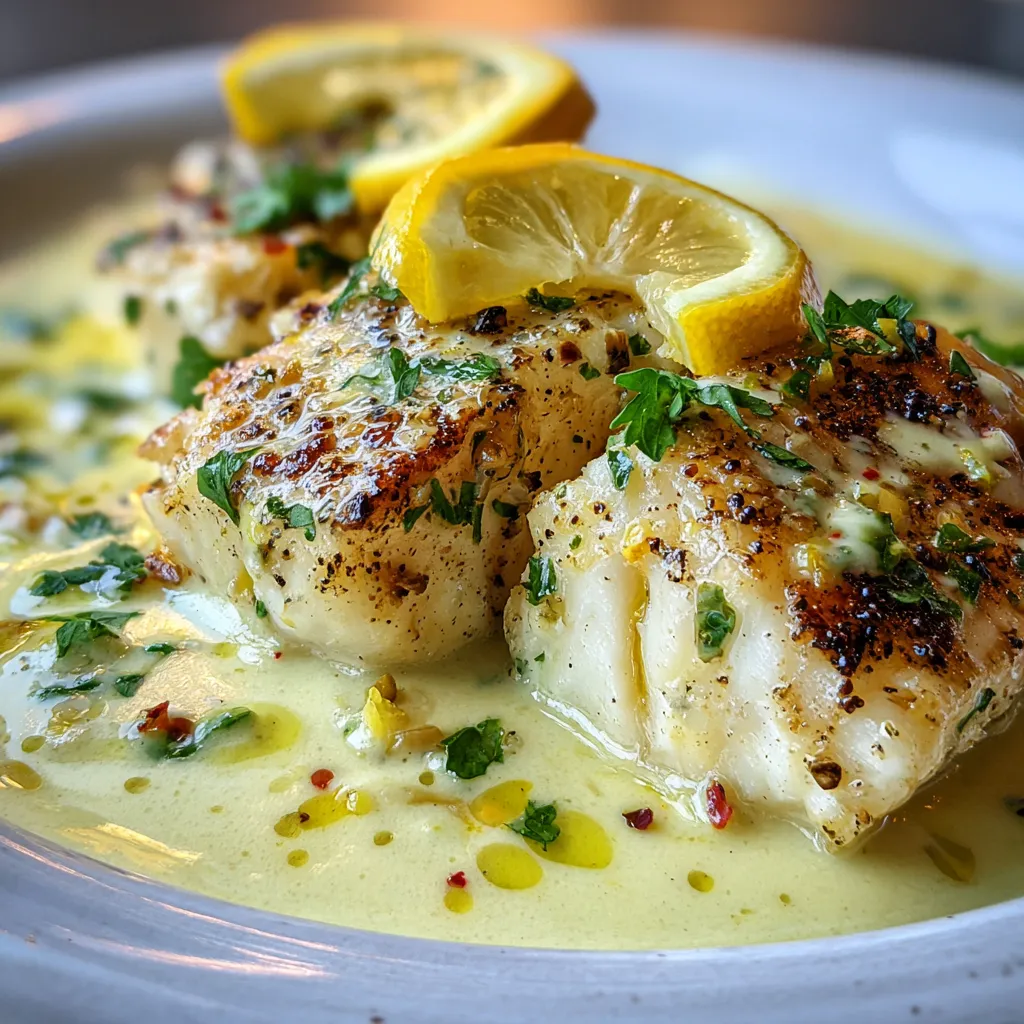

Halibut with Zesty Lemon Beurre Blanc
Description
Pan-seared halibut emerges golden and flaky, bathed in a creamy sauce enriched with tangy lemon juice and cold butter, offering a smooth, citrus-kissed finish that elevates every forkful.
Ingredients
Instructions
-
Pat halibut fillets dry and season both sides with salt and black pepper.
-
Heat olive oil in a nonstick skillet over medium-high heat.
-
Sear halibut 4 minutes per side until opaque and golden brown, then transfer to a warm plate.
-
Add shallots, white wine, lemon juice, and lemon zest to the same skillet and bring to a gentle simmer.
-
Reduce the liquid until about 2 tablespoons remain.
-
Stir in heavy cream and lower the heat to low.
-
Gradually whisk in cold butter pieces until the sauce is smooth and emulsified.
-
Season the beurre blanc with salt and white pepper to taste.
-
Spoon the warm sauce over the halibut and serve immediately.
Note
- Ensure the butter is very cold for optimal emulsification
- Do not let the sauce boil after adding butter to prevent separation
- A light dry white wine, such as Sauvignon Blanc, works best
- Serve immediately to maintain the fish’s texture and sauce warmth

