

Gochujang Glazed Carrots deliver a playful punch of spicy-sweet flavor to your dinner table, taking humble carrots on a ride through sticky gochujang, honey, and garlic before a quick sauté. Bright orange sticks finish tender-crisp, topped with crunchy sesame seeds and fresh green onions for a pop of color and texture. Whether you need a show-stopping side or a new weeknight favorite, this recipe’s simple steps and bold taste will have you coming back for seconds.
Key Ingredients
Before diving in, make sure you’ve gathered these flavorful essentials—all you need for a perfect glaze and vibrant finish.
- 1 pound of carrots, peeled and cut into sticks or rounds: the bright base that soaks up the spicy-sweet glaze and crisps up perfectly.
- 2 tablespoons of olive oil: provides the pan surface for a gentle sauté and helps caramelize the carrots.
- 2 tablespoons of gochujang (Korean chili paste): delivers that signature spicy, umami-packed kick to the glaze.
- 1 tablespoon of honey or maple syrup: balances heat with sticky sweetness for a glossy finish.
- 1 tablespoon of soy sauce: adds savory depth and salty richness to the sauce.
- 1 tablespoon of rice vinegar: brings a bright acidity that cuts through the richness.
- 2 cloves of garlic, minced: infuse aromatic warmth and pungent flavor throughout.
- 1 teaspoon of sesame oil: gives a toasty, nutty aroma at the end.
- 1 sprinkle of sesame seeds (for garnish): adds crunchy texture and a final flavor pop.
- 2 green onions, sliced (for garnish): lend freshness and color contrast to each bite.
How To Make Gochujang Glazed Carrots
Let’s transform raw carrots into a sticky, spicy-sweet sensation in just a few easy stages. You’ll whip up the glaze, coat the veggies, and sauté them until tender-crisp, ending with a glossy finish that clings to every piece.
1. Prepare the carrots: Peel and slice them into uniform sticks or rounds about ¼-inch thick so they cook evenly, ensuring every piece finishes tender-crisp.
2. Make the glaze: In a large mixing bowl, whisk together gochujang, honey or maple syrup, soy sauce, rice vinegar, minced garlic, and sesame oil until completely smooth and well combined.
3. Toss carrots in sauce: Add the carrot sticks to the bowl and stir gently so that each piece is thoroughly coated with the spicy-sweet mixture.
4. Heat the oil: Warm the olive oil in a large skillet over medium heat until it shimmers, preparing it for a quick sauté.
5. Sauté the carrots: Place the coated carrots into the hot skillet and cook for 8–10 minutes, stirring occasionally, until they reach a tender-crisp texture with lightly caramelized edges.
6. Add remaining glaze: Pour any leftover sauce from the bowl into the skillet; stir well and let it cook for another 1–2 minutes, allowing the glaze to thicken and cling to the carrots.
7. Finish cooking: Remove the skillet from the heat and transfer the glossy carrots to a serving dish while they’re still piping hot.
8. Garnish and serve: Sprinkle with sesame seeds and sliced green onions for a crunchy, fresh finish before presenting to the table.
Serving Suggestions
These Gochujang Glazed Carrots shine as more than just a side—they’re a versatile flavor booster for a variety of meals. Here are four tasty ways to showcase their spicy-sweet magic:
- Pair with grilled proteins: Serve alongside charred chicken, pork, or beef to complement the meaty flavors with a spicy-sweet twist.
- Vegetarian bowls: Layer them over a bed of quinoa or rice with roasted tofu and steamed veggies for a colorful, balanced meal.
- Appetizer platter: Add these carrots to a shared vegetable platter alongside pickles and dips for an interactive starter.
- Wrap or taco filling: Use as a vibrant filling in tortilla wraps with crunchy slaw and fresh herbs for a fun handheld bite.
Tips For Perfect Gochujang Glazed Carrots
Nailing the balance of heat, sweetness, and texture is simple with a few friendly pointers. Keep these notes in mind to elevate your glazed carrots every time:
- Gochujang is versatile; try using it in marinades, dressings, or as a base for soups to make the most of its rich umami.
- Adjust the level of spiciness by varying the amount of gochujang to suit your taste—dial it down for a mild kick or up for serious heat.
- These glazed carrots pair wonderfully as a side dish for grilled meats or as part of a vegetarian platter, adding color and flavor depth.
- For added texture and flavor, consider adding toasted nuts like peanuts or almonds as a final garnish right before serving.
How To Store It
Leftovers taste great and you’ll want to keep that glaze lively. Follow these storage tips to maintain freshness, texture, and flavor:
- Refrigerate in an airtight container: Once cooled to room temperature, store carrots in a sealed container in the fridge for up to three days to maintain their tender-crisp texture.
- Gently reheat: Warm leftovers in a skillet over medium heat for 2–3 minutes, stirring occasionally, or microwave in 30-second intervals until heated through.
- Loosen the glaze: If the sauce thickens too much, add a teaspoon of water or a drizzle of sesame oil when reheating to restore its silky consistency.
- Freeze for longer storage: Transfer carrots to a freezer-safe bag and freeze for up to one month; thaw overnight in the refrigerator before reheating gently to preserve their texture.
Frequently Asked Questions
Got questions? Here are quick answers to help you master these glazed carrots:
- Q: How long does it take to prepare and cook these gochujang glazed carrots?
A: From start to finish, plan on about 20 to 25 minutes. Peeling and cutting the carrots takes roughly 5 to 7 minutes, whisking together the glaze takes about 2 minutes, and sautéing the carrots until tender-crisp takes another 8 to 10 minutes. Allow an extra minute or two to finish coating the carrots in the glaze and garnish before serving.
- Q: How can I adjust the spiciness of the glaze to suit different tastes?
A: To reduce heat, simply use 1 tablespoon of gochujang instead of 2, or swap in a milder chili paste. To amp up the spice, increase gochujang to 3 tablespoons or stir in a pinch of red pepper flakes or a dash of Sriracha. If you’d like a touch of sweetness to balance extra heat, add an additional teaspoon of honey or maple syrup.
- Q: Can I make this recipe vegan or gluten-free?
A: Yes. For a vegan version, use maple syrup instead of honey and verify that your gochujang contains no animal products (most are vegan). To make it gluten-free, substitute tamari or a certified gluten-free soy sauce and ensure your gochujang has no wheat ingredients.
- Q: What’s the best way to store and reheat leftovers?
A: Store leftover glazed carrots in an airtight container in the refrigerator for up to three days. To reheat, gently warm them in a skillet over medium heat for 2 to 3 minutes, stirring occasionally, or microwave in 30-second intervals until heated through. If the glaze has thickened too much, add a teaspoon of water or sesame oil when reheating to loosen it.
- Q: Can I prepare the gochujang glaze ahead of time?
A: Absolutely. Whisk the gochujang, honey (or maple syrup), soy sauce, rice vinegar, garlic, and sesame oil together and store the sauce in a sealed jar or container in the refrigerator for up to two days. Give it a good stir before tossing with the carrots and sautéing.
- Q: What are some tasty serving suggestions or pairings for these glazed carrots?
A: These carrots shine alongside grilled or roasted meats like chicken, pork, or beef. They also work beautifully in a vegetarian grain bowl with quinoa or rice, topped with roasted tofu or chickpeas. For a more casual spread, include them on a shared platter with other vegetable sides, pickles, and steamed buns.
- Q: How can I ensure the carrots cook evenly and maintain a good texture?
A: Cut your carrots into uniform sticks or rounds, about ¼-inch thick, to promote even cooking. Heat the oil in the skillet until shimmering before adding the carrots in a single layer—avoid overcrowding. Stir or toss every 2 to 3 minutes so each piece gets direct heat, resulting in carrots that are tender on the inside with a slight crunch and caramelized edges.
What Makes This Special
There’s something hilariously addictive about the way these carrots soak up that sticky gochujang glaze, turning an everyday vegetable into the star of the show. The interplay of sweet honey, fiery chili paste, and tangy vinegar creates a flavor rollercoaster that’s fun, vibrant, and seriously tasty. You’ll want to print this article, tack it on your fridge, and keep it handy for whenever you crave a vegetable side with attitude. Drop a comment below if you give it a whirl or need any extra tips—I’m here for all your carrot-glazing adventures!
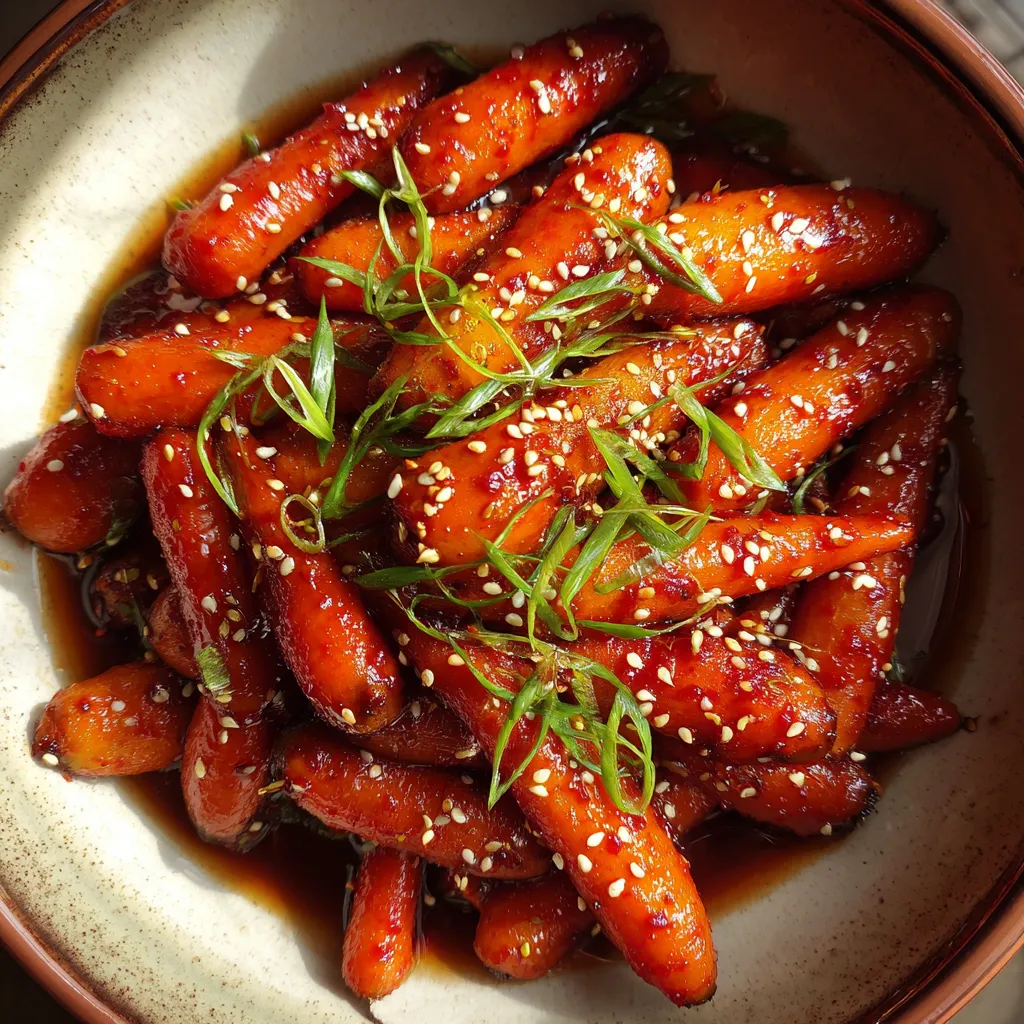

Gochujang Glazed Carrots
Description
Bright carrots get a quick toss in a savory, fiery-sweet gochujang sauce. Lightly sautéed until tender-crisp, they’re sprinkled with sesame seeds and green onion for a pop of flavor.
Ingredients
Instructions
-
Start by preparing the carrots. Peel them and cut them into uniform sticks or rounds to ensure even cooking.
-
In a large mixing bowl, combine the gochujang, honey (or maple syrup), soy sauce, rice vinegar, minced garlic, and sesame oil. Whisk everything together until you have a smooth sauce.
-
Add the carrot sticks to the bowl with the sauce and toss them well, ensuring that all the carrots are evenly coated with the gochujang mixture.
-
In a large skillet or pan, heat the olive oil over medium heat. Once the oil is hot, add the coated carrots to the skillet.
-
Sauté the carrots for about 8 to 10 minutes, stirring occasionally, until they are tender but still have a slight crunch.
-
Once the carrots are cooked to your liking, pour any remaining glaze from the bowl into the skillet and stir to coat the carrots thoroughly. Allow it to cook for an additional 1-2 minutes to ensure the glaze is heated through and sticky.
-
Remove the skillet from heat and transfer the glazed carrots to a serving dish.
-
Garnish with sesame seeds and sliced green onions before serving.
Note
- Gochujang is versatile; try using it in marinades, dressings, or as a base for soups.
- Adjust the level of spiciness by varying the amount of gochujang to suit your taste.
- These glazed carrots pair wonderfully as a side dish for grilled meats or as part of a vegetarian platter.
- For added texture and flavor, consider adding toasted nuts like peanuts or almonds as a final garnish.

