

Bright spring veggies swirl in a velvety sauce, twirling through fettuccine in a burst of fresh color and creamy comfort. Creamy Spring Vegetable Pasta Primavera celebrates tender asparagus, peas, zucchini, and carrot melding with ribbons of fettuccine in a luscious cream and Parmesan sauce brightened by lemon zest and parsley. This delightful dish is perfect for an easy dinner that feels elegant and fresh. Dive into the steps below and bring a taste of spring to your table tonight.
Key Ingredients
Here’s what you’ll need to assemble this Creamy Spring Vegetable Pasta Primavera—each ingredient plays a vital role in creating that perfect balance of fresh veggies and luscious sauce.
- 12 oz fettuccine pasta: Provides silky ribbons that soak up the creamy sauce and carry the spring vegetables.
- 1 tbsp olive oil: Adds a subtle fruity flavor and prevents sticking when sautéing the aromatics.
- 2 tbsp unsalted butter: Enriches the sauce with a smooth, buttery base and helps cook the veggies.
- 1 small onion, chopped: Builds savory depth with its sweet, translucent flavor once sautéed.
- 3 cloves garlic, minced: Infuses the dish with pungent, aromatic warmth.
- 1 cup asparagus, cut into 1-inch pieces: Brings a fresh, green bite and tender-crisp texture.
- 1 cup peas, thawed: Offers sweet pops of color and a tender contrast.
- 1 small zucchini, sliced: Contributes mild flavor and softens to juicy perfection.
- 1 medium carrot, sliced: Adds sweet earthiness and a vibrant orange hue.
- 1 cup heavy cream: Creates the rich, velvety base of the sauce.
- 1/2 cup grated Parmesan cheese: Provides nutty, salty depth and helps thicken the sauce.
- 1 tsp lemon zest: Brightens the dish with a citrusy pop.
- Salt to taste: Enhances all the flavors in the sauce and vegetables.
- Black pepper to taste: Adds a gentle heat and aromatic spice.
- 2 tbsp fresh parsley, chopped: Finishes with a fresh herbal note and color contrast.
How To Make Creamy Spring Vegetable Pasta Primavera
Follow these steps to turn raw ingredients into a vibrant and creamy pasta primavera. From cooking your fettuccine al dente to building layers of sautéed veggies and stirring in the luscious cream and Parmesan, you’ll end up with a comforting yet fresh dish that’s perfect for spring dinner gatherings. Keep an eye on your sauté so veggies remain crisp-tender, and use reserved pasta water to ensure a silky sauce that clings to every strand of pasta.
1. Bring a large pot of salted water to a boil and cook the fettuccine until al dente, stirring occasionally to prevent sticking.
2. Reserve 1/2 cup of pasta cooking water and drain the pasta, setting the liquid aside to adjust the sauce later.
3. Meanwhile, heat olive oil and butter in a large skillet over medium heat until the butter melts and starts to foam.
4. Add the chopped onion and minced garlic and sauté until fragrant and translucent, about 2 minutes.
5. Add the sliced carrot and asparagus pieces, cooking for 3 minutes until they begin to soften but remain slightly crisp.
6. Stir in the zucchini slices and thawed peas, cooking for an additional 2 minutes to heat through and retain texture.
7. Pour in the heavy cream and bring to a gentle simmer, stirring occasionally until the sauce thickens slightly.
8. Add the grated Parmesan cheese and stir until fully melted, creating a creamy and cohesive sauce.
9. Add the cooked pasta to the skillet and toss to coat, adding reserved pasta water as needed for your desired consistency.
10. Stir in the lemon zest and chopped parsley, then season with salt and freshly ground black pepper to taste.
11. Serve immediately, garnished with extra Parmesan if desired for an added flavor boost.
Serving Suggestions
This Creamy Spring Vegetable Pasta Primavera shines when plated and garnished thoughtfully. Whether you’re hosting a casual weeknight dinner or entertaining friends for a light spring lunch, these simple serving touches will elevate your dish. Consider adding contrasting textures, a splash of brightness, or pairing it with complementary sides to round out the meal. The goal is to highlight the vibrant vegetables and creamy sauce while keeping everything fresh, colorful, and inviting.
- Serve piping hot in shallow bowls to showcase the vibrant colors and creamy sauce, making it easy to twirl each fettuccine ribbon.
- Sprinkle extra grated Parmesan and a pinch of red pepper flakes on top for a hint of spice and an extra layer of umami.
- Accompany with crusty garlic bread brushed with olive oil and garlic for a crunchy contrast to the silky pasta.
- Pair with a crisp green salad dressed lightly in lemon vinaigrette to balance the richness and add a refreshing bite.
Tips For Perfect Creamy Spring Vegetable Pasta Primavera
Getting the timing, freshness, and balance just right can transform your Pasta Primavera from good to unforgettable. Embrace the season’s best produce—bright, crisp asparagus and sweet peas—and chop everything uniformly so each bite is consistent. Keep your sauté pan hot but not smoking to maintain that tender-crisp texture, and don’t rush the cream’s gentle simmer to ensure optimal thickness. Snag some quality Parmesan (or try a sharper Pecorino Romano) for depth, and taste as you go when adding salt and pepper. With these pointers, your plate will burst with color, flavor, and the perfect creamy coating.
- Use a mix of fresh spring vegetables for optimal flavor and color
- Reserving pasta water helps adjust the sauce to a silky consistency
- Substitute Pecorino Romano for Parmesan for a sharper taste
- For a lighter dish, replace heavy cream with half-and-half
How To Store It
Whether you have leftovers or want to prep for future meals, storing this pasta primavera properly ensures you’ll enjoy those same fresh flavors and creamy texture later. From fridge-friendly containers to freezer-safe portions, a few simple steps will keep your dish tasting just as vibrant as the day you cooked it. Follow these storage methods to maintain the integrity of the sauce, prevent sogginess, and streamline reheating—so every bite feels as delightful as when served fresh.
- Refrigerator: Transfer cooled pasta into an airtight container and store in the fridge for up to 3 days to keep flavors fresh.
- Freezer: Portion the dish into freezer-safe containers, leaving headspace for expansion; freeze for up to 2 months and thaw overnight in the refrigerator.
- Reheating (Stovetop): Warm gently in a skillet over low heat, adding a splash of reserved water or broth to restore the creamy consistency.
- Reheating (Microwave): Place in a microwave-safe bowl, cover loosely, and heat in 30-second intervals, stirring between bursts to ensure even warming.
Frequently Asked Questions
Got questions about this Creamy Spring Vegetable Pasta Primavera? You’re not alone—check out these quick answers to help you perfect every bite!
- Q: How long does it take to prepare this recipe?
A: It takes about 30 minutes to prepare and cook this dish. This includes 10 minutes to chop and prep vegetables, 10 minutes to boil the pasta until al dente, and about 10 minutes to sauté the vegetables and simmer the creamy sauce.
- Q: Can I use a lighter dairy substitute in place of heavy cream?
A: Yes, you can replace heavy cream with half-and-half for a lighter result. Since half-and-half has less fat, the sauce may be slightly thinner and may require a few extra minutes of simmering or the addition of reserved pasta water to reach a silky consistency.
- Q: My sauce turned out too thin. How can I thicken it?
A: If your sauce is too thin, let it simmer gently for a few more minutes to reduce and thicken naturally. Stir in a little extra grated Parmesan cheese to help it set. You can also add small amounts of the reserved pasta cooking water and continue stirring until the desired creaminess is achieved.
- Q: What vegetables work best in this primavera, and can I prep them ahead of time?
A: Spring vegetables like asparagus, peas, zucchini, and carrots offer the best flavor and color. You can wash, peel, and chop them up to a day in advance, store them in an airtight container in the fridge, and then sauté them directly from cold to save time on the day you cook.
- Q: How do I keep the vegetables crisp yet tender?
A: To maintain a crisp-tender texture, start by cooking the firmer vegetables like carrots and asparagus first, then add the softer ones such as zucchini and peas a few minutes later. Avoid overcooking by stirring frequently and adjusting the cooking time so each vegetable retains a bit of bite.
- Q: Can I use different pasta shapes or cheese varieties?
A: Yes, you can swap fettuccine for other long pastas like linguine or tagliatelle, or choose short shapes like penne or rigatoni that hold sauce well. For cheese, Pecorino Romano adds a sharper tang, while a blend of Parmesan and Asiago delivers extra depth of flavor.
What Makes This Special
There you have it—a fun, fresh spin on classic pasta filled with a rainbow of spring veggies in a rich, dreamy sauce. This Creamy Spring Vegetable Pasta Primavera works because the al dente fettuccine traps every drop of that velvety cream, while carrot, asparagus, zucchini, and peas bring pops of color and texture. It’s the perfect balance of comfort-meets-fresh, brightened by zesty lemon and pops of parsley. Feel free to print this article, save it for later, and share any questions or comments below—because once you try it, you’ll want to make it again (and again!).
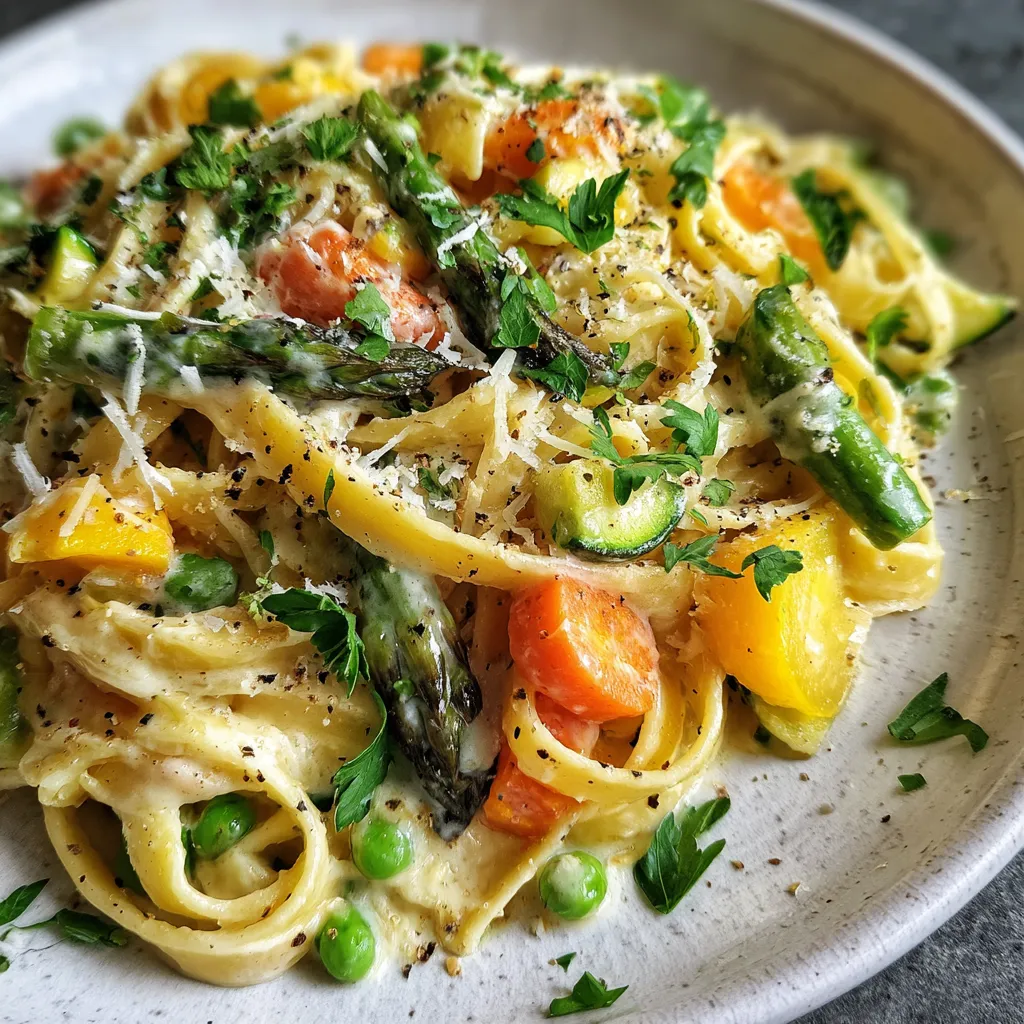

Creamy Spring Vegetable Pasta Primavera
Description
Tender asparagus, peas, zucchini and carrot meet ribbons of fettuccine in a luscious cream and Parmesan sauce, brightened with lemon zest and parsley for a fresh taste of spring in every bite.
Ingredients
Instructions
-
Bring a large pot of salted water to a boil and cook the fettuccine until al dente.
-
Reserve 1/2 cup of pasta cooking water and drain the pasta.
-
Meanwhile heat olive oil and butter in a large skillet over medium heat.
-
Add onion and garlic and sauté until fragrant and translucent.
-
Add carrot and asparagus and cook for 3 minutes until slightly tender.
-
Stir in zucchini and peas and cook for an additional 2 minutes.
-
Pour in heavy cream and bring to a gentle simmer until the sauce thickens slightly.
-
Add Parmesan cheese and stir until fully melted and sauce is creamy.
-
Add cooked pasta to the skillet and toss to coat, adding reserved pasta water as needed for desired consistency.
-
Stir in lemon zest and parsley, then season with salt and black pepper to taste.
-
Serve immediately, garnished with extra Parmesan if desired.
Note
- Use a mix of fresh spring vegetables for optimal flavor and color
- Reserving pasta water helps adjust the sauce to a silky consistency
- Substitute Pecorino Romano for Parmesan for a sharper taste
- For a lighter dish, replace heavy cream with half-and-half

