

Thanksgiving is around the corner, and this year I’m beyond excited to introduce you to my Cajun Butter Turkey—a showstopper that promises to be the centerpiece of your holiday feast. This recipe takes a classic turkey and transforms it with a bold, spicy Cajun butter rub that seeps deep into the meat, enlivening every slice with a burst of flavor. We’re talking a harmonious blend of garlic powder, onion powder, and smoked paprika balanced with a hint of cayenne pepper for that signature bayou heat. Dried thyme and oregano add an earthy, fragrant layer, and the softened butter ensures the crust is extra golden and luxurious. When you tuck lemons, quartered onion, smashed garlic cloves, and fresh herbs like rosemary and parsley into the cavity, those aromatics infuse the bird as it roasts to perfection. The result? A juicy, savory turkey that combines festive tradition with zesty Southern flair—perfect for impressing guests or treating your family to something delightfully different this Thanksgiving.
One of my favorite things about this Cajun Butter Turkey is how approachable it is for cooks at an intermediate level, even if you’ve never tackled a whole bird before. You’ll need about 30 minutes to prep the turkey, then let it roast for roughly 2½ hours at 325°F (163°C), followed by a 30-minute resting period to ensure those juices distribute evenly. This timeline is perfect for freeing you up to whip together side dishes like creamy mashed potatoes or tangy cornbread stuffing while the turkey works its magic in the oven. Planning for a gathering of around 12 people? You’re in luck: this recipe serves approximately 12 with an estimated 400 calories per serving. Last year, I prepped the seasoned butter rub the night before to let the flavors meld, and waking up to that spice-infused butter made carving the next day feel like a breeze. Now I can’t imagine a holiday dinner without its zesty, buttery richness lighting up the table.
KEY INGREDIENTS IN CAJUN BUTTER TURKEY
Before you roll up your sleeves and get basting, let’s take a closer look at the star players in this recipe. Each ingredient contributes something special, from deep smokiness to bright citrus notes, so be sure to assemble them all for maximum deliciousness.
- Whole turkey
The canvas for all our flavors—choose a high-quality, fully thawed bird for even cooking and a tender, juicy result.
- Unsalted butter
Acts as the base for the spice paste, ensuring an even coating while keeping salt levels under control so you can fine-tune seasoning.
- Garlic powder
Provides a mellow, savory punch that infuses the meat with warmth without overpowering other spices.
- Onion powder
Adds subtle sweetness and depth, complementing the garlic and creating a fuller flavor profile in every bite.
- Smoked paprika
Delivers a gentle smokiness and vibrant color, evoking all the charm of Cajun cooking with minimal effort.
- Dried thyme
Brings an earthy, herbal note that balances the heat and enhances the overall aromatic bouquet.
- Dried oregano
Infuses a Mediterranean flair, rounding out the spice blend with its warm, slightly peppery taste.
- Salt
Essential for drawing out moisture and seasoning the meat from the inside, elevating every mouthful.
- Black pepper
Offers a piquant, woody heat that pairs beautifully with the cayenne without stealing the spotlight.
- Cayenne pepper
The secret to that signature kick—adjust the amount to suit your heat tolerance, from mild to fiery.
- Lemon
Brightens the flavor when tucked inside the cavity, and its oils mingle with the herbs for a fresh finish.
- Onion
Quartered and placed inside, it releases natural sweetness and moisture as it roasts, helping keep the turkey succulent.
- Garlic cloves
Smashing them before stuffing intensifies their pungent aroma, permeating the meat from the inside out.
- Fresh herbs
Rosemary and parsley bring vibrant green notes and a fragrant lift, turning each roast into a true sensory experience.
HOW TO MAKE CAJUN BUTTER TURKEY
With all your ingredients at the ready, let’s walk through the step-by-step process that will help you achieve a beautifully roasted, flavor-packed turkey. Follow these instructions closely, and you’ll end up with a bird that’s as impressive to serve as it is delicious to eat.
1. Preheat your oven to 325°F (163°C). Ensure the turkey is fully thawed and has been sitting at room temperature for about 30 minutes to promote even cooking throughout the bird.
2. In a large mixing bowl, combine the softened butter, garlic powder, onion powder, smoked paprika, dried thyme, dried oregano, salt, black pepper, and cayenne pepper. Use a spatula or spoon to mix until you have a smooth, creamy paste with all the spices evenly distributed.
3. Carefully loosen the skin of the turkey breast and thighs by gently sliding your fingers between the skin and meat. This key technique helps the butter rub penetrate deeply without tearing the skin.
4. Scoop half of the Cajun butter mixture and spread it evenly under the skin, covering as much surface area of the meat as possible. Take any remaining butter and rub it all around the outside of the turkey, making sure every inch is coated.
5. Stuff the cavity with the quartered lemon, onion, smashed garlic cloves, and fresh herbs. These aromatics will steam from within, infusing the meat with bright, herbaceous notes.
6. Place the turkey on a roasting rack set inside a large roasting pan, positioning it breast side up. Tuck the wing tips underneath the body to prevent them from burning during roasting.
7. Loosely cover the turkey with aluminum foil and slide it into the preheated oven. Roast for about 2 to 2.5 hours, or until a meat thermometer inserted into the thickest part of the thigh reads 165°F (74°C).
8. In the last 30 minutes of cooking, remove the foil to allow the skin to crisp up and develop a gorgeous golden hue. Every half hour, baste the turkey with its own pan juices to build layer upon layer of flavor.
9. Once the internal temperature hits 165°F, carefully take the turkey out of the oven and set it aside, covered loosely with foil. Let it rest for 20–30 minutes—this step is crucial for juicy, tender slices.
10. Transfer the turkey to a carving board, carve into slices, and serve alongside your favorite sides for a holiday meal that’s bursting with flavor.
SERVING SUGGESTIONS FOR CAJUN BUTTER TURKEY
Now that your Cajun Butter Turkey is beautifully roasted and resting, it’s time to think about plating and pairing. Whether you’re hosting a formal dinner or a relaxed family gathering, these serving ideas will help you showcase your masterpiece and keep your guests raving.
- Herb-garnished platter
Arrange sliced turkey on a large serving tray and tuck sprigs of fresh rosemary and parsley around the meat. The pop of green makes for an inviting presentation and highlights the turkey’s aromatic flavors.
- Rich pan gravy
Strain the drippings from your roasting pan, then whisk in a bit of flour and stock to create a velvety gravy. Serve it in a warm boat so guests can drizzle it generously over both turkey and side dishes.
- Festive sideboards
Surround the turkey with colorful accompaniments like cranberry chutney, roasted root vegetables, and creamy mashed potatoes. The contrast in textures and tastes enhances the bold Cajun seasoning.
- Leftover sliders bar
For second helpings or next-day excitement, set up a slider station with mini brioche buns, slices of turkey, and condiments. Your spicy butter rub shines in these bite-sized sandwiches.
HOW TO STORE CAJUN BUTTER TURKEY
After the big feast winds down, you’ll want to preserve every last bit of that zesty goodness. Proper storage ensures you can enjoy the flavors again without compromising texture or taste. Follow these tips for keeping your turkey fresh, safe, and ready for delicious leftovers.
- Refrigerate promptly
Once the turkey has cooled to room temperature, carve off the meat and place it in shallow airtight containers. Store in the refrigerator for up to 4 days, making sure to label each container with the date.
- Freeze slices
For longer storage, wrap individual portions of sliced turkey tightly in plastic wrap and place them in freezer-safe bags. Remove as much air as possible before sealing to prevent freezer burn. Frozen turkey keeps well for 2–3 months.
- Store bones for broth
Don’t toss the carcass—pop it into a pot with vegetables and water to simmer a homemade stock. After straining, cool and store in airtight jars for up to a week in the fridge or several months in the freezer.
- Reheat gently
When ready to enjoy leftovers, warm turkey slices in a covered baking dish with a splash of stock at 300°F (150°C) until heated through. This method helps maintain moisture and prevents drying out.
CONCLUSION
Bringing a Cajun Butter Turkey to your holiday table is a surefire way to elevate your gathering with bold, zesty flavors and show-stopping presentation. From that first bite of golden, spice-infused skin to the last hint of tangy lemon and aromatic herbs, this recipe delivers a feast for the senses. You’ve learned how to mix the perfect buttery rub, expertly loosen the skin for maximum flavor infusion, and roast the bird to juicy, tender perfection. Serving suggestions like a rich pan gravy or a festive slider bar will keep your guests delighted, while storage tips ensure you can savor leftovers without losing that signature Cajun kick. With an intermediate difficulty level, a total workshop time of about three hours including rest, and an easy-to-follow process, this dish is both manageable and utterly rewarding.
Feel free to print this article and save it for your next festive celebration—you can even check out the FAQ below for answers to common questions about cooking times, spice adjustments, and more. If you give this recipe a try, I’d love to hear how it turned out: leave a comment, share your adaptations, or post questions if you need any help along the way. Your feedback and stories are what make cooking such a joyful, communal experience, so let’s keep the conversation going and make every holiday meal one to remember!
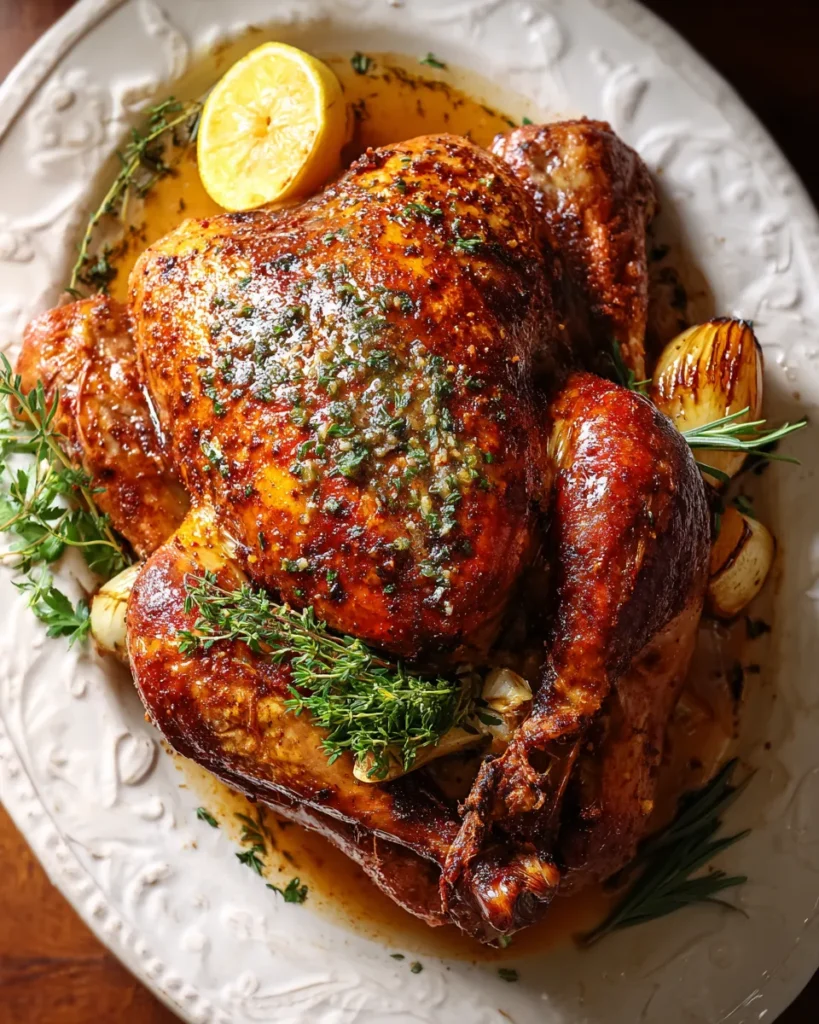

Cajun Butter Turkey
Description
Experience a juicy turkey infused with a spicy Cajun butter rub that delivers a burst of flavor in every bite. Perfectly roasted for a festive feast.
Ingredients
Instructions
-
Preheat your oven to 325°F (163°C). Make sure the turkey is fully thawed and at room temperature for even cooking.
-
In a mixing bowl, combine the softened butter, garlic powder, onion powder, smoked paprika, thyme, oregano, salt, black pepper, and cayenne pepper. Mix until well combined into a creamy paste.
-
Carefully loosen the skin of the turkey breast and thighs by sliding your fingers between the skin and the meat. Take care not to tear the skin.
-
Take half of the Cajun butter mixture and spread it evenly under the loosened skin, covering as much of the meat as possible. Rub any remaining butter all over the outside of the turkey, making sure to cover it completely.
-
Stuff the turkey cavity with the quartered lemon, onion, smashed garlic, and fresh herbs. This will add flavor and aroma as the turkey cooks.
-
Place the turkey on a roasting rack in a large roasting pan, breast side up. Tuck the wing tips under the bird to prevent burning.
-
Cover the turkey loosely with aluminum foil and bake in the preheated oven. Roast for about 2 to 2.5 hours, or until the internal temperature at the thickest part of the thigh reaches 165°F (74°C).
-
Remove the foil in the last 30 minutes of cooking for a beautifully golden and crispy skin. Baste the turkey with its own juices every 30 minutes during this time for extra flavor.
-
Once the turkey reaches the desired temperature, remove it from the oven and allow it to rest for at least 20-30 minutes before carving. This will help the juices to redistribute and keep the meat moist.
-
Carve and serve your Cajun butter turkey alongside your favorite sides.
Note
- This recipe is perfect for Thanksgiving or any special gathering.
- You can prepare the Cajun butter mixture a day ahead to ensure the flavors meld together.
- Replace smoked paprika with regular paprika for a milder flavor.
- Leftover turkey can be used in sandwiches, soups, or salads for days after!
- Always use a meat thermometer to ensure perfect cooking and avoid dryness.

