

There’s nothing quite like sinking your fork into a pillow of pappardelle swirled through a deep, ruby-red sauce that’s been coaxed to perfection over hours of gentle heat. Each bite of this Braised Short Rib Ragu tells a story of time and patience, with beef short ribs that have surrendered their richness to a glorious tomato–wine reduction. The silky strands of pasta catch every drop, ensuring your taste buds ride that savory wave until the very last slurp. It’s the kind of dish that invites you to linger at the table, glass of bold red wine in hand, savoring every mouthful and sharing laughter with someone you love.
Over the years, I’ve discovered that this ragu excels at turning ordinary evenings into memorable gatherings. There’s a sense of ritual in searing the ribs until they’re beautifully caramelized, then deglazing the pan with a splash of wine that crackles as it hits the hot surface. As the sauce bubbles away with fragrant herbs and garlic, your kitchen fills with hints of rosemary, thyme, and tomato sweetness, weaving together like an Italian sonnet. This is comfort food at its most refined—a dish that feels effortlessly elegant yet profoundly satisfying. Once you’ve mastered this Braised Short Rib Ragu, you’ll find yourself coming back to it for special occasions and simple weeknight dinners alike. Trust me, every sticky spoonful will make you feel like you’ve just unlocked the secret to soulful, slow-cooked perfection.
KEY INGREDIENTS IN BRAISED SHORT RIB RAGU
Every ingredient in this Braised Short Rib Ragu plays a vital role in building layers of flavor, texture, and aroma. From the succulent meat to the fresh herbs, each component partners to deliver a dish that’s robust, nuanced, and utterly comforting. Here’s a closer look at what goes into creating this luxurious ragu:
- Bone-in beef short ribs
These meaty cuts are the star of the show, offering rich marbling and connective tissue that break down into tender, fall-off-the-bone perfection during the long braise.
- Salt and freshly ground black pepper
Essential for seasoning, these simple staples enhance the natural flavors of the short ribs and balance the acidity of the tomato base.
- Olive oil
A healthy fat that provides a flavorful medium for searing the ribs and softening the vegetables, ensuring nothing sticks to the pot.
- Onion
Adds sweetness and depth once sautéed, forming part of the classic Italian soffritto that’s the backbone of many sauces.
- Carrots
Lend a subtle earthy sweetness and a pop of color, helping to round out the acidity of the tomatoes.
- Celery
Offers a gentle, aromatic savory note and slight crunch when cooked down, complementing the carrots and onion.
- Garlic
Infuses warmth and pungency, brightening the sauce with every minced clove you stir in.
- Tomato paste
Intensifies the tomato flavor and adds a touch of umami, deepening the sauce’s color and richness.
- Red wine
A bold partner—preferably Cabernet Sauvignon or Merlot—that deglazes the pan and contributes tannins and fruitiness to the sauce.
- Crushed tomatoes
Provide a luscious base that melds with the braising liquid, offering texture and vibrant tomato flavor.
- Beef stock
Amplifies the meaty essence of the dish, ensuring the sauce remains silky and savory even as it thickens.
- Fresh rosemary
Imparts a piney, fragrant note that pairs beautifully with beef.
- Fresh thyme
Adds subtle earthy undertones, rounding out the herbaceous profile.
- Bay leaf
Offers a delicate background note that enhances all the other flavors without overwhelming them.
- Pappardelle pasta
Wide, ribbon-like noodles that cradle every bit of ragu, capturing the sauce in their folds.
- Parmesan cheese
Grated on top for a salty, nutty finish that melts slightly into the warm sauce.
- Fresh parsley
Sprinkled at the end for a bright, herbaceous contrast and a pop of green color.
HOW TO MAKE BRAISED SHORT RIB RAGU
Let’s dive into the step-by-step process that transforms these straightforward components into a soul-warming masterpiece. Each phase—from searing to braising and finally shredding—is crucial, so follow along closely to achieve that luxurious, fall-apart texture and a sauce bursting with depth.
1. Preheat your oven to 325°F (165°C). This low, steady temperature ensures the short ribs become meltingly tender without drying out.
2. Season the short ribs generously with salt and freshly ground black pepper on all sides, making sure every inch is evenly coated.
3. In a large Dutch oven or oven-safe pot, heat the olive oil over medium-high heat until it shimmers.
4. Sear the short ribs in the hot oil until browned on all sides—about 8–10 minutes total. This Maillard reaction builds flavor by creating savory crusts.
5. Remove the short ribs from the pot and set them aside on a plate to rest for a moment.
6. In the same pot, add the diced onion, carrots, and celery. Sauté until the vegetables soften and start to caramelize, about 5 minutes.
7. Add the minced garlic and tomato paste, cooking for another 2 minutes while stirring frequently to prevent burning.
8. Pour in the red wine, using a wooden spoon to scrape up any browned bits from the bottom of the pot—those bits are pure flavor gold.
9. Allow the wine to simmer and reduce by half, roughly 5 minutes, until it’s slightly thickened and aromatic.
10. Stir in the crushed tomatoes and beef stock, whisking to combine into a smooth, rich sauce.
11. Return the short ribs to the pot, nestling them into the liquid so they’re almost fully submerged.
12. Add the fresh rosemary, thyme, and bay leaf on top, pushing them gently into the sauce for even infusion.
13. Bring the mixture to a gentle simmer, then cover the pot with its lid and transfer it to the preheated oven.
14. Braise for about 2½ to 3 hours, or until the short ribs are so tender they practically dissolve at the touch of a fork.
15. Once cooked, carefully remove the short ribs from the pot and shred the meat with two forks, discarding the bones and excess fat.
16. Return the shredded meat to the sauce, stirring thoroughly, then simmer on low heat for another 20 minutes so the flavors can harmonize.
17. Meanwhile, cook the pappardelle pasta according to package instructions. Drain and immediately combine with the ragu sauce so each ribbon is gloriously coated. Serve topped with grated Parmesan cheese and chopped fresh parsley.
SERVING SUGGESTIONS FOR BRAISED SHORT RIB RAGU
When it comes time to serve your Braised Short Rib Ragu, presentation and complementary flavors can elevate this comforting masterpiece even further. Take a moment to warm your serving bowls or plates so the sauce stays hot longer. Offer extra grated Parmesan, a drizzle of good-quality olive oil, and a side of crusty bread to sop up every last drop. And don’t forget a robust glass of red wine to mirror the notes in the sauce—this level of attention to detail transforms a homecooked meal into a truly memorable experience.
- Family-Style Platter
Arrange the pasta and ragu in a large shallow dish, garnish with fresh parsley, and place at the center of the table so everyone can help themselves.
- Individual Bowls
Serve portions in warmed pasta bowls, sprinkle extra Parmesan and a crack of black pepper, then finish with a few whole rosemary leaves for visual appeal.
- Crusty Bread on the Side
Offer slices of toasted ciabatta or baguette brushed with garlic-infused olive oil. The crunchy texture contrasts beautifully with the silky sauce.
- Light Green Salad
Balance the rich ragu with a simple salad of mixed greens, thinly sliced fennel, and a lemony vinaigrette to provide a refreshing counterpoint.
HOW TO STORE BRAISED SHORT RIB RAGU
This ragu is just as satisfying the next day, if not more so, because the flavors have had time to mingle and intensify. Proper storage is key to keeping your leftovers tasting fresh and vibrant. When cooled to room temperature, transfer the ragu into airtight containers to prevent it from absorbing any fridge odors. Label and date each container so you always know how long it’s been stored. Below are foolproof methods to help you enjoy your ragu later on.
- Refrigerate in Airtight Containers
Once completely cool, spoon the ragu into sealable containers. It will keep for up to 4 days in the coldest part of your fridge—perfect for quick reheated meals during the week.
- Freeze in Portion-Sized Bags
Divide cooled ragu into meal-sized portions and lay freezer bags flat in the freezer. They’ll stack nicely, thaw quickly, and last for up to 3 months.
- Vacuum Sealing
If you have a vacuum sealer, use it to remove air before freezing. This method preserves flavor and texture longer, making your ragu taste nearly as fresh as the day you made it.
- Reheat Gently
Whether refrigerated or frozen, warm the ragu in a saucepan over low heat, stirring occasionally. Add a splash of beef stock or water if the sauce seems too thick, ensuring it reheats evenly without scorching.
CONCLUSION
This Braised Short Rib Ragu has everything you need for an unforgettable dinner: tender, slow-cooked meat, a lush tomato–wine sauce, and comforting pappardelle that captures every drop of flavor. You’ve learned how each ingredient—from the fragrant herbs to the savory beef stock—plays its part, and you’ve walked through every step of the cooking process, from searing and deglazing to braising and shredding. Serving suggestions and storage tips ensure you get the most out of this dish, whether you’re sharing it with loved ones tonight or savoring leftovers throughout the week.
Feel free to print and save this article for your recipe collection, and keep it handy anytime you crave something warm, hearty, and deeply satisfying. Below you’ll find a FAQ section to address any lingering questions about substitutions, timings, or troubleshooting. I’d love to hear how your Braised Short Rib Ragu turns out—please drop a comment, share your cooking tales, or ask any questions if you need help along the way. Your feedback makes this cooking community shine, and I can’t wait to see your plates piled high with this comforting Italian classic!
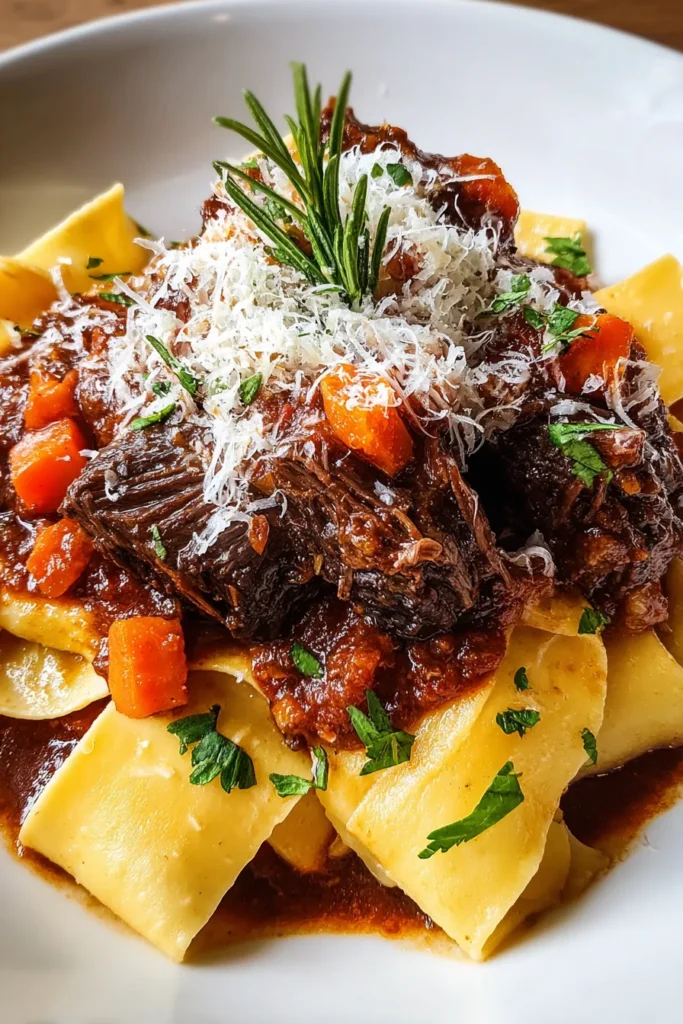

Braised Short Rib Ragu
Description
This luscious ragu features tender short ribs simmered in a rich tomato-wine sauce, perfect over pappardelle. It's a cozy dish that celebrates deep, savory flavors and warms the soul.
Ingredients
Instructions
-
Preheat your oven to 325°F (165°C).
-
Season the short ribs generously with salt and freshly ground black pepper on all sides.
-
In a large Dutch oven or oven-safe pot, heat the olive oil over medium-high heat.
-
Sear the short ribs in the hot oil until browned on all sides. This should take about 8-10 minutes.
-
Remove the short ribs from the pot and set them aside.
-
In the same pot, add the diced onion, carrots, and celery. Sauté until the vegetables are softened, about 5 minutes.
-
Add the minced garlic and tomato paste, and cook for another 2 minutes, stirring frequently.
-
Pour in the red wine, scraping the bottom of the pot to release any browned bits.
-
Allow the wine to simmer and reduce by half, for about 5 minutes.
-
Stir in the crushed tomatoes and beef stock, then return the short ribs to the pot.
-
Add the fresh rosemary, thyme, and bay leaf.
-
Bring the mixture to a simmer, cover the pot, and transfer it to the preheated oven.
-
Braise for about 2.5 to 3 hours, or until the short ribs are tender and fall off the bone.
-
Once cooked, remove the short ribs from the pot and shred the meat. Discard the bones.
-
Return the shredded meat to the pot, stirring it into the sauce. Simmer on low heat for another 20 minutes to allow flavors to meld.
-
Cook the pappardelle pasta according to package instructions. Drain and combine with the ragu sauce.
-
Serve the ragu over the cooked pasta, and top with grated Parmesan cheese and chopped parsley.
Note
- For a deeper flavor, try using a bold red wine like Cabernet Sauvignon or Merlot.
- You can make the ragu a day ahead, and it will taste even better as the flavors develop overnight.
- Adjust the thickness of the sauce by adding more beef stock if needed.
- This dish pairs well with a side of crusty bread or a simple green salad.
- Freezing leftover ragu in portion-sized containers is a great way to save and enjoy later.

