
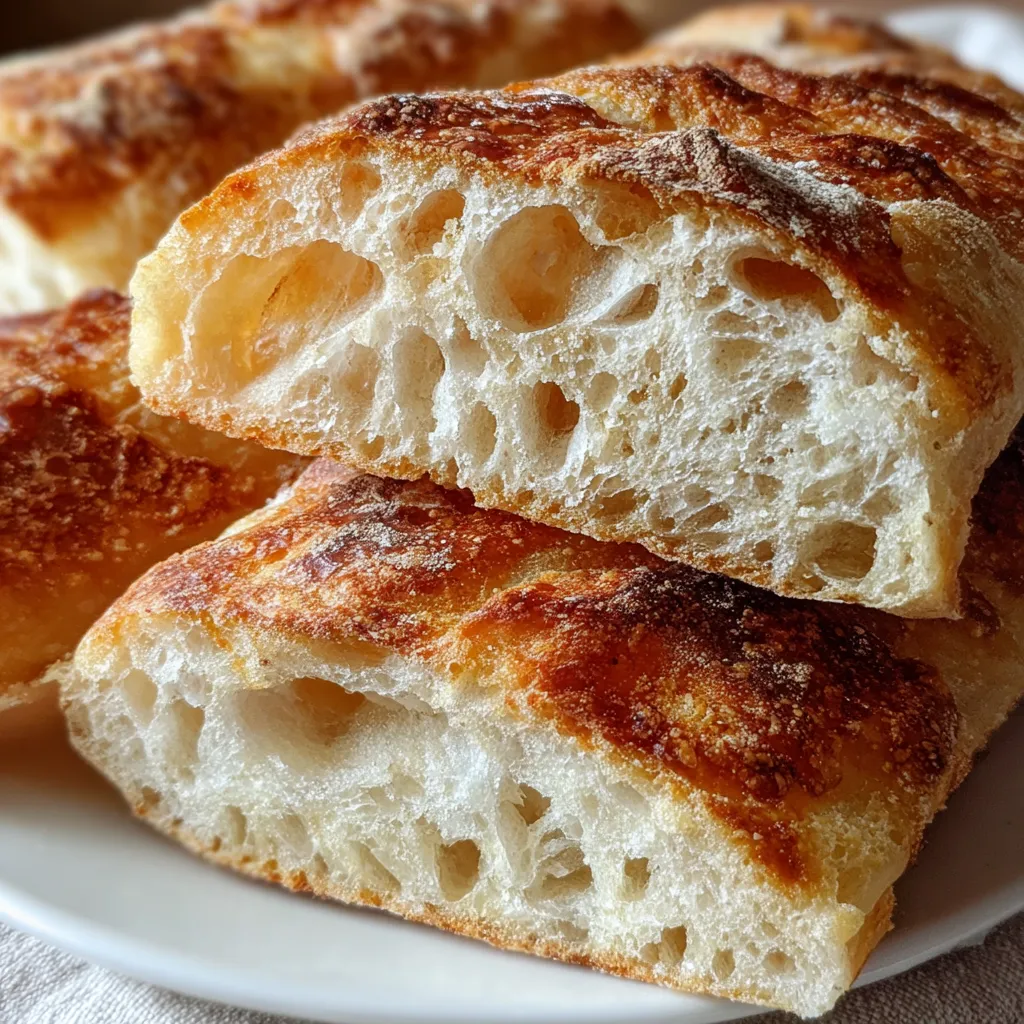
Get ready to bake a rustic loaf that cracks open to reveal a pillowy, open crumb beneath a golden, crackly crust—all with no kneading! With just flour, water, yeast, salt, and a splash of olive oil, this no-knead ciabatta brings artisan flair to your kitchen. The long, gentle fermentation creates a network of airy tunnels, and a final olive oil kiss adds extra crispness. Dive in to learn how simple it can be!
Before we dive into the slow magic of fermentation, let’s gather our few simple ingredients that turn into a rustic loaf with a bronzed, airy interior and a mouthwatering crust.
Now that we’ve assembled our essentials, let’s walk through each step—from mixing a shaggy dough to coaxing out delicate air pockets—to transform these humble ingredients into an artisan masterpiece. You’ll learn how to ferment slowly, shape gently, and bake with steam to achieve that signature crunchy crust and open, airy crumb. Follow along below for a detailed, step-by-step guide that walks you through the entire no-knead process, ensuring your ciabatta comes out golden brown every time.
1. In a large mixing bowl, combine the flour and salt, mixing well to evenly distribute the ingredients and create a uniform base.
2. In a separate bowl, mix the lukewarm water and instant yeast until the yeast is fully dissolved, then let it rest for about 5 minutes to proof and activate.
3. Pour the yeast mixture into the flour mixture and stir with a wooden spoon or spatula until a lumpy dough forms—don’t worry about smoothness, overmixing can deflate those future air pockets.
4. Cover the bowl with plastic wrap or a damp kitchen towel, and let it rest at room temperature for 12 to 18 hours to allow a long bulk fermentation that builds flavor and structure.
5. After resting, the dough should be bubbly and noticeably risen. Generously dust your work surface with flour and carefully turn the dough out onto it.
6. With floured hands, gently stretch the dough into a rectangle, being careful not to deflate it. Folding it in thirds like a letter adds strength and improves oven spring.
7. Once folded, cover with a floured kitchen towel and let the dough rise for another 30 minutes to develop a bit more lift.
8. Meanwhile, place a baking stone or an inverted baking sheet in the oven and preheat to 450°F (232°C). If you have a Dutch oven, preheat that as well to trap extra steam.
9. When the oven’s ready, transfer the dough onto a piece of parchment paper using a bench scraper to keep its shape intact.
10. If using a Dutch oven, remove it from the oven, place the parchment with the dough inside (without the lid), or slide the parchment onto the preheated baking stone or sheet.
11. Drizzle a little olive oil on top of the dough for extra flavor and crispness.
12. Bake for 25–30 minutes, covering the Dutch oven for the first 20 minutes if using, then uncovering for the remainder. Look for a deep golden-brown crust and a hollow sound when tapped.
13. Remove the loaf from the oven and let it cool on a wire rack for at least 30 minutes before slicing to allow the crumb to set properly.
This ciabatta’s crackly exterior and soft interior make it a showstopper in any meal. Whether you’re layering it for sandwiches at brunch or pairing warm slices with olive oil for dipping, this loaf elevates the simplest bites. It’s perfect for sharing at breakfast tables or as a rustic backdrop to soups and salads. Here are four easy ways to serve your fresh ciabatta that’ll impress family and friends and highlight its airy crumb and crunchy crust.
For the crispiest crust and lightest crumb, a few insider tweaks can make all the difference. Patience during the long fermentation, gentle handling to preserve those precious air pockets, and embracing variations will take your no-knead ciabatta from great to unforgettable. Whether you’re a weekend warrior or an everyday baker, these focused tips will help you navigate each stage—from mixing to cooling—to ensure your loaf emerges bronzed, airy, and ready to impress every time.
Once your ciabatta has cooled, proper storage is key to maintaining that delightful crunch and tender crumb. Whether you plan to enjoy your loaf over the next few days or freeze leftovers for later, these storage methods will help preserve the crusty exterior and prevent staling. Follow these simple tips to keep each slice tasting freshly baked.
Got questions? Here are some quick answers to common no-knead ciabatta queries.
The dough needs to rest for 12 to 18 hours at room temperature to allow slow enzyme activity and yeast fermentation to develop flavor, strength, and those signature bubbles. This extended time builds complex taste and an open crumb without any heavy kneading.
Dust both your hands and work surface generously with flour and use a bench scraper to gently lift and fold the dough. Avoid adding too much extra flour at once; sprinkle lightly between folds. Wetting your hands can help prevent sticking without compressing the dough’s structure.
Yes. If you only have active dry yeast, dissolve it first in the lukewarm water with a pinch of sugar and let it proof for 5 to 10 minutes until bubbly. Then proceed as directed, keeping the same rise times since the overall fermentation and flavor development remain crucial.
Preheat a baking stone or inverted sheet at 450°F (232°C) to deliver intense heat from below. Adding steam by using a preheated Dutch oven or by placing a shallow pan of hot water on the oven floor in the first 10 to 15 minutes of baking traps moisture, which then transforms into crisp crust as the steam dissipates.
Allowing the bread to cool on a wire rack for at least 30 minutes is essential so the interior crumb sets and excess moisture redistributes, preventing a gummy texture. Cutting too soon will distort the airy structure you worked to create.
Absolutely. After the dough’s first bulk rest, gently spread it into a rectangle, scatter your mix-ins evenly, and fold as instructed. Keep the total hydration in mind—moist ingredients like olives may warrant an extra dusting of flour to maintain dough consistency.
Store at room temperature in a paper bag or loosely wrapped in a kitchen towel. Plastic will trap moisture and soften the crust. For longer storage, slice and freeze in airtight bags; reheat in a 350°F (175°C) oven for 5 to 10 minutes to revive crispness.
Simply scale all ingredients twofold and use a larger vessel for fermentation. Keep rise times and temperatures identical. You may need to handle the dough in batches or divide it after bulk fermentation to ensure each loaf bakes with proper heat circulation.
There’s something magical about a loaf that demands no arduous kneading yet rewards you with a crackly golden crust, pillow-soft interior, and aromatic complexity you’d expect from an artisan bakery. This recipe works because it harnesses the power of time and simple ingredients, trusting slow fermentation to build flavor and structure while you go about your day. It’s forgiving, versatile, and invites playful tweaks—herbs, olives, or sun-dried tomatoes all welcome. Feel free to print and tuck this recipe into your favorite binder, then share your baking triumphs (or questions!) in the comments below—nothing beats the joy of fresh ciabatta straight from the oven.
Crack through the bronzed crust to reveal a network of light, airy tunnels and breathe in the warm, yeasty fragrance. A drizzle of olive oil gilds each bite, marrying crispiness with a soft, pillowy center.

Ciao, beautiful souls! I'm Isabella Romano, and welcome to my kitchen where comfort meets creativity, and every recipe is designed to make your everyday cooking feel a little more special.