
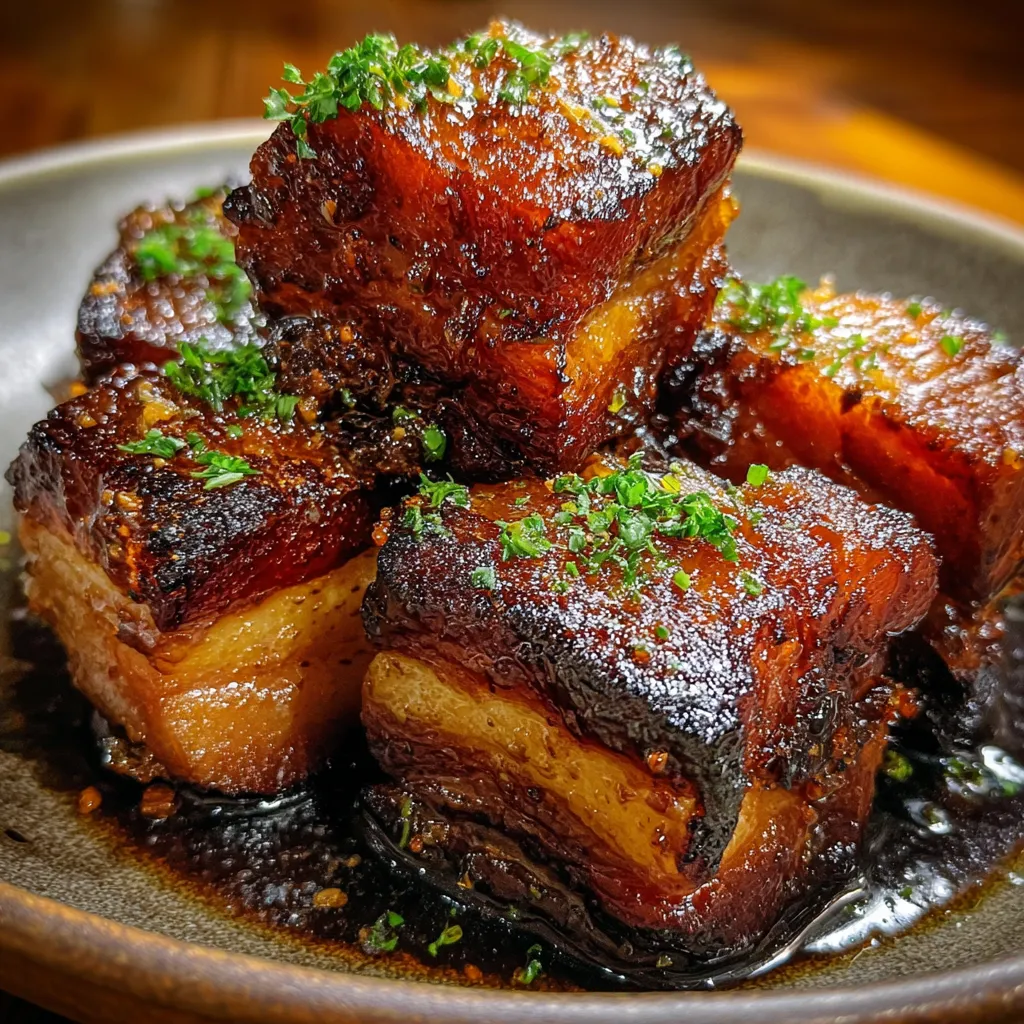
If you’re craving a dish that brings equal parts sweet, smoky, and spirited flavors, this Whiskey Brown Sugar Pork Belly is your new go-to. Tender pork belly melds with a boozy brown sugar glaze, slow-roasted until it practically melts in your mouth, then blasted at high heat to achieve that irresistible crackle. Whether you’re planning a cozy dinner or a festive gathering, this recipe will deliver serious wow factor.
Before diving in, let’s get familiar with the cast of characters that make this dish unforgettable:
This recipe follows a simple but transformative process: marinating the pork belly in a rich whiskey–brown sugar blend, roasting it low and slow so the fat renders and the meat tenderizes, then finishing with high heat to crisp the skin. Each step builds complexity and ensures that every bite is a perfect balance of juicy pork and caramelized glaze. Let’s dive into the details.
1. Preheat your oven to 300°F (150°C) to ensure a low-and-slow roast.
2. In a mixing bowl, combine brown sugar, whiskey, soy sauce, apple cider vinegar, Dijon mustard, minced garlic, black pepper, salt, smoked paprika, and red pepper flakes (if using). Stir until the marinade is smooth and well blended.
3. Marinate the pork belly by placing the scored piece in a large resealable bag or shallow dish. Pour the marinade over it, turning to coat thoroughly. Seal or cover with plastic wrap, then refrigerate for at least 2 hours, or overnight for maximum flavor.
4. Bring to room temperature by removing the pork belly from the fridge and letting it sit for about 30 minutes before roasting.
5. Prepare the baking dish by lining it with aluminum foil. Place the pork belly skin-side up and reserve any leftover marinade for basting.
6. Roast the pork belly for 2 to 2.5 hours, or until the meat is tender and the fat has rendered. Halfway through cooking, baste with the reserved marinade to enhance the glaze.
7. Increase the oven temperature to 450°F (232°C) for the last 20–30 minutes to achieve a crispy, golden-brown skin. Watch closely to prevent burning.
8. Rest the cooked pork belly by removing it from the oven and letting it sit for 10–15 minutes, allowing juices to redistribute.
9. Slice the pork belly into pieces and serve warm, garnished with chopped parsley.
Once your pork belly is ready, the fun really begins. Whether you’re plating it for a family meal or creating a crowd-pleasing appetizer, these serving ideas will help you showcase that glorious glaze and crackling skin. From hearty dinners to party bites, each suggestion balances rich pork with complementary flavors and textures for an unforgettable experience.
Mastering this pork belly recipe is all about patience and personal flair. Letting the meat soak up that sweet-and-spicy marinade, keeping the temperature low during the initial roast, and then hitting it with big heat at the end are the core secrets. But beyond that, there are little tweaks you can try to make this dish truly your own. Whether you’re meal prepping for the week or serving at a get-together, these tips will help ensure every bite is pure magic.
After enjoying your pork belly feast, you’ll want to keep those leftovers tasting just as good. Proper storage will preserve both the tenderness and the crispness of the glaze while preventing any waste. Whether you plan to dig in the next day or save portions for later, follow these straightforward methods to maintain fresh, flavorful results.
Here are answers to some common questions about whiskey brown sugar pork belly to help you get the best results every time.
Yes. You can use bourbon, rye or even a smoky Scotch. Bourbon adds sweet vanilla notes, rye lends a spicier bite, and Scotch can impart a subtle peat smoke. Each variation will slightly change the depth and character of the marinade.
Scoring allows fat to render during cooking and helps the marinade penetrate for more even seasoning. Use a sharp knife to make shallow diagonal cuts about 1/4 inch deep, spacing them roughly 1/2 inch apart across the surface of the skin.
You can still achieve good flavor with a minimum of two hours in the refrigerator. Massage the marinade into the pork, cover or seal, and chill for at least two hours. The flavors will be milder than an overnight soak but still delicious.
After slow-roasting at 300°F, increase the oven to 450°F for the final 20–30 minutes. Before this stage, gently pat the skin dry with paper towels to remove excess moisture, then watch closely to pull it out the instant it turns golden brown and crackles.
Because it’s been in contact with raw pork, you must bring the reserved marinade to a rolling boil on the stovetop for a few minutes to kill any bacteria and reduce it to a thicker glaze. Only then should you use it for basting.
Allow the pork belly to cool, then store it in an airtight container in the refrigerator for up to four days or freeze for up to one month. To reheat, place slices on a baking sheet in a 325°F oven until warmed through to preserve crispness, or briefly pan-sear over medium heat for added texture.
It pairs beautifully with roasted root vegetables, a tangy apple slaw, steamed rice or crusty bread. For parties, slice into bite-sized pieces, skewer with toothpicks, drizzle with extra glaze and garnish with fresh parsley.
From the moment you whisk together brown sugar with whiskey, soy sauce, and spices, you can tell this isn’t your average roast. The slow, low-temperature cook time teases out velvety tenderness, while that final burst of high heat transforms the skin into perfectly crackling magic. It works because the balance of sweet, tangy, savory, and spicy notes hits every spot on your taste buds, and the contrast between silky meat and crispy skin is pure joy. Go ahead, print this out, stash it in your recipe binder, and get ready for endless compliments. Got questions or fun results to share? Leave a comment—I’d love to hear how yours turned out!
Marinated in a blend of brown sugar, whiskey, soy sauce, and spices, this pork belly roasts low and slow, yielding juicy, caramelized meat under crackling skin. A final high-heat blast seals in the crisp, smoky notes.

Ciao, beautiful souls! I'm Isabella Romano, and welcome to my kitchen where comfort meets creativity, and every recipe is designed to make your everyday cooking feel a little more special.