
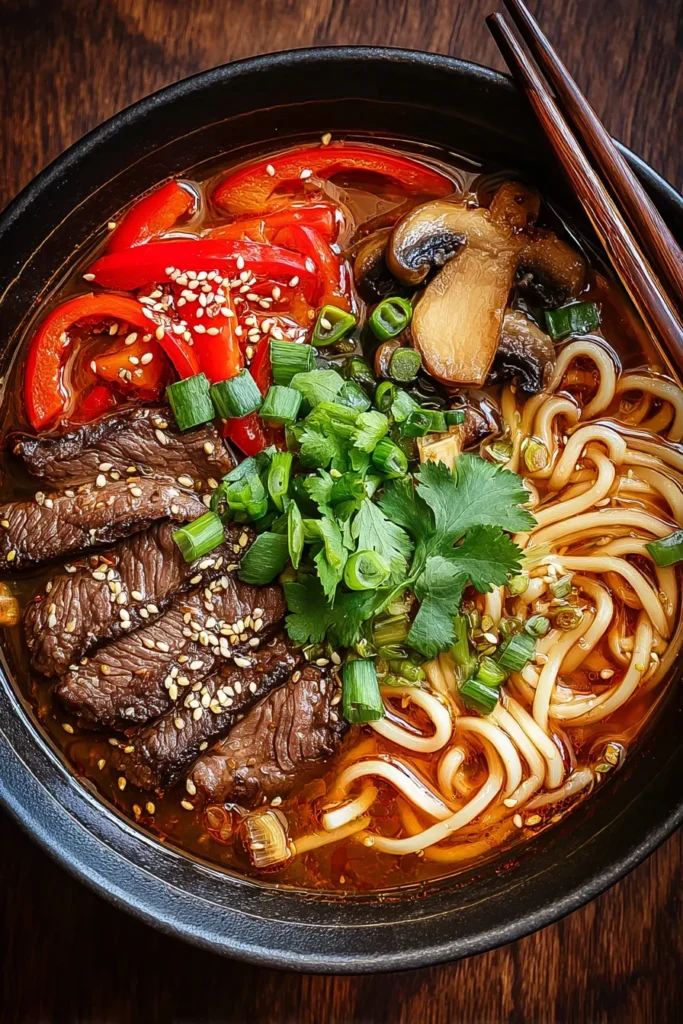
If you’re craving a dish that brings a playful kick of heat, a comforting hug of noodles, and a savory burst of beefy goodness, you’re in the right place. These Spicy Korean Gochujang Beef Noodles are the perfect weeknight delight that feels both exotic and familiar. Tender slices of sirloin sizzle in a hot wok, mingling with garlic and ginger, while a vibrant sauce of gochujang, soy, and sesame oil clings lovingly to every strand of chewy udon. It’s a dance of textures and tastes—earthy mushrooms, crunchy bell pepper, and bright green onions all join the party. You’ll find yourself stirring the sauce around, catching every drop on your fork, and maybe even licking your lips as you go for seconds.
I still remember the first time I whipped up a variation of this recipe for my friends at a casual dinner party. The room filled with excited chatter as the skillet sizzled, releasing that rich, spicy perfume that makes your mouth water. We tucked into bowls heaped high with noodles, laughter echoing off the walls as each bite delivered a satisfying umami punch. That night, we passed the soy sauce and rice vinegar back and forth, tweaking the seasoning until everyone’s taste buds were happy. That’s what cooking is all about—sharing good food, discovering little personal twists, and savoring the warmth of home-cooked meals. So grab your wok, cue up your favorite playlist, and let’s dive into the magic of gochujang beef noodles!
Every ingredient in this recipe plays a starring role, weaving together a harmony of flavors and textures. From silky noodles to bold chili paste, each component brings its own personality to the bowl, ensuring a balanced meal that’s as visually appealing as it is delicious.
Rich, tender, and full of flavor, thinly sliced beef sirloin or ribeye cooks quickly and soaks up the spicy-sweet sauce, delivering juicy bites in every forkful.
With a satisfying chewiness, these wheat noodles create the perfect base to cradle the saucy beef and veggies, ensuring each strand is coated in gochujang goodness.
A classic umami powerhouse, soy sauce rounds out the chili paste’s spiciness with salty depth, providing a savory backbone to the entire dish.
This fermented chili paste brings moderate heat, subtle sweetness, and a hint of tang—essential for that signature Korean flavor profile.
Just a splash of toasted sesame oil adds a nutty aroma that elevates the rich sauce, giving the noodles a distinctly Korean flair.
A neutral cooking oil that helps achieve a quick, high-heat sear on the beef, garlic, and ginger without overpowering the other flavors.
Minced garlic delivers aromatic warmth and a hint of pungency, forming the fragrant base that wakes up your taste buds.
Fresh ginger lends a sweet-spicy zing that cuts through the richness of the beef, brightening the overall flavor.
A touch of sweetness balances the spicy and salty notes, creating a well-rounded sauce that isn’t overly fiery.
A dash of acidity from rice vinegar brings brightness and contrast to the savory, spicy elements, ensuring the dish never feels too heavy.
Adds moisture to the skillet, helps thin the sauce, and infuses a subtle meaty richness, ensuring the noodles remain saucy and flavorful.
Crisp, sweet, and vibrant in color, sliced red bell pepper adds a crunchy dimension and fresh contrast to the rich beef and noodles.
Earthy and meaty, sliced shiitake mushrooms contribute a deep umami note and a satisfying chewiness that pairs beautifully with the beef.
Sliced into pieces, green onions introduce a fresh, sharp bite and a pop of green color, enhancing both flavor and presentation.
Scattered on top, these add a delicate crunch and extra nutty aroma, finishing the dish with a bit of textural flair.
A handful of fresh cilantro leaves brings bright herbal notes that cut through the richness, adding a refreshing finish to each spoonful.
Let’s dive into the step-by-step process of bringing this flavorful dish together. From perfectly cooked noodles to that irresistible gochujang sauce, each step is designed to maximize taste and texture, ensuring an experience you’ll want to recreate again and again.
1. Cook the Korean wheat noodles or udon according to package instructions. Once they’re al dente and tender, immediately drain them in a colander and set aside, so they’re ready to soak up all the saucy goodness later.
2. In a small bowl, combine the soy sauce, gochujang, and sesame oil. Whisk thoroughly until the paste is fully dissolved and a glossy, rich sauce forms. Set this mixture aside as your flavor-packed star.
3. Heat the vegetable oil in a large skillet or wok over medium-high heat. Make sure the pan is hot enough to sizzle when you add ingredients—this ensures a quick, flavorful sear.
4. Add the minced garlic and ginger to the hot skillet. Sauté for about 30 seconds, stirring constantly until fragrant and golden, but not browned.
5. Toss in the thinly sliced beef and stir-fry for 2–3 minutes. Keep the meat moving in the pan so it browns evenly and stays tender.
6. Stir in the sliced bell pepper and shiitake mushrooms. Continue cooking for another 2 minutes, allowing the vegetables to soften slightly while retaining a bit of crunch.
7. Pour in the prepared sauce, then add the sugar and rice vinegar. Stir well to coat the meat and veggies, melding all the flavors together into a cohesive sauce.
8. Add the beef broth (or water) and let it simmer for about 2 minutes, stirring occasionally. This brief simmer helps the sauce thicken to the perfect consistency.
9. Gently fold in the cooked noodles, giving them a thorough toss so each strand is luxuriously coated with the spicy sauce.
10. Finally, add the green onions and toss again for another minute, just to wilt them slightly and infuse their fresh flavor into the dish.
11. Serve the noodles hot, garnished with a sprinkle of toasted sesame seeds and a handful of fresh cilantro for that final burst of aroma and color.
Once your noodles are sizzling off the stove, it’s time to think about how to present them for maximum enjoyment. Whether you’re serving a cozy dinner for two or a festive gathering with friends, these suggestions will help you elevate both flavor and style.
If you have leftovers (and trust me, you might), storing them properly is key to maintaining texture and flavor. Follow these tips to enjoy your gochujang beef noodles another day without losing that fresh-from-the-wok appeal.
By now, you’ve seen how easy it is to whip up a bowl of Spicy Korean Gochujang Beef Noodles that’s bursting with flavor, color, and texture. From the first sizzle of garlic and ginger to the final garnish of sesame seeds and cilantro, each step is a chance to engage your senses and share a moment with friends or family. This recipe sits squarely at the intersection of bold Korean flavors and simple home-cooking comfort. It’s perfect for dinner or lunch, carries a moderate level of difficulty for intermediate cooks, and takes just 35 minutes from prep to table. Plus, at around 600 calories per generous serving, it’s hearty and satisfying without tipping the scales.
Feel free to print this article and save it in your recipe binder or digital folder for those nights when you need a quick but memorable meal. Keep the FAQ section below in mind if you have questions about ingredient swaps, spice levels, or storage tips. I’d love to hear how your version turns out—drop a comment, share your personal tweaks, or ask any questions you have about making this recipe at home. Your feedback and stories are what make cooking such a joyful, shared adventure. Enjoy every bite, and happy cooking!
These Spicy Korean Gochujang Beef Noodles are a vibrant blend of tender beef, fresh veggies, and bold flavors that come together in a delightful, satisfying dish perfect for any meal.

Ciao, beautiful souls! I'm Isabella Romano, and welcome to my kitchen where comfort meets creativity, and every recipe is designed to make your everyday cooking feel a little more special.