
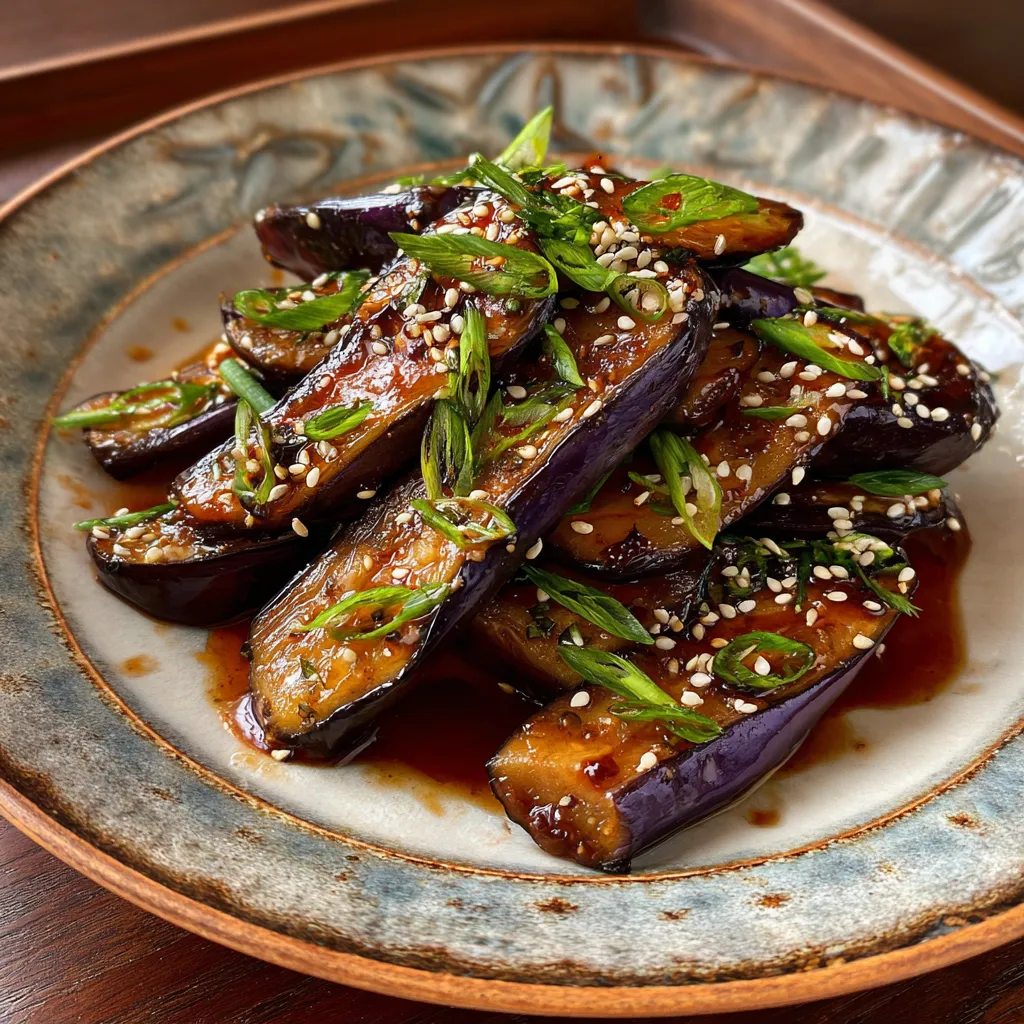
Dive into the world of Miso Glazed Eggplant, where tender roasted eggplant meets a glossy, sweet-savory miso glaze. Japanese or globe eggplants transform into umami bombs as miso, mirin, honey, and sesame oil meld into the perfect coating. Finished with crunchy sesame seeds and vibrant green onions, this dish is a breeze for beginners yet impressive enough for dinner parties. Ready to elevate your veggie game? Let’s dig in!
To make this Miso Glazed Eggplant come to life, here’s what you’ll need. Each ingredient plays a key role in delivering that glossy, umami-packed finish.
Ready to turn those humble eggplants into a stunning, flavor-packed side or main? This simple process guides you from preheating the oven to basting and roasting, ensuring each slice gets that irresistible caramelized miso coating. With straightforward steps—mixing the glaze, slicing the eggplant, and timing your roast—you’ll have a hands-off yet impressive dish that shines on any table. Let’s break it down and walk through each step in detail.
1. Preheat your oven to 400°F (200°C) and line a baking sheet with parchment paper for easy cleanup.
2. Wash and dry the eggplants thoroughly. Slice Japanese eggplants in half lengthwise or quarter a large globe eggplant for even cooking.
3. In a small mixing bowl, combine the white miso paste, soy sauce, mirin, sesame oil, honey, and rice vinegar. Whisk until the mixture is smooth to create a glossy glaze.
4. Place the eggplant pieces cut-side up on the prepared baking sheet. Brush each slice generously with the miso glaze, making sure all surfaces are well coated.
5. Roast the eggplant in your preheated oven for 25 to 30 minutes, or until the flesh is tender and the glaze has caramelized and started to bubble.
6. Remove the eggplant from the oven and let it cool slightly. This resting time helps the glaze set and intensify in flavor.
7. Garnish with sesame seeds and sliced green onions for a final touch of crunch and color, then serve warm as a side dish or over rice for a hearty main course.
Serving Miso Glazed Eggplant is all about complementing its rich umami glaze and tender texture. Whether you’re planning a cozy weeknight dinner or hosting friends, these suggestions will help you make the most of every savory bite. Think beyond the ordinary and pair this dish with simple sides, transform it into hearty bowls, or even feature it as an appetizer that steals the show. Add fresh garnishes or extra drizzle to boost the presentation, and watch as everyone dives in for seconds and asks for your secret. It’s the perfect recipe to impress with minimal effort.
Getting Miso Glazed Eggplant just right is easier than you think, and these friendly tips will take your dish to the next level. From adding a hint of smokiness to making it fully vegan, small tweaks can make a big difference. Plus, you’ll learn how to repurpose the glaze and broaden your veggie repertoire, so every cooking session feels fresh and fun.
Storing leftover Miso Glazed Eggplant properly ensures you can enjoy its umami-rich flavor days later without losing texture or taste. Whether you’re packing lunches, meal-prepping for the week, or simply saving extra servings for a quick side, these methods will keep your eggplant fresh and delicious. With the right containers and temperatures, you’ll preserve the tender flesh and glossy miso coating in perfect condition. Read on for simple, effective storage hacks that make reheating a breeze and guarantee your next bite is every bit as mouthwatering as when you first served it.
Got questions about Miso Glazed Eggplant? Here are some quick answers to help you master the recipe and troubleshoot any concerns.
It takes about 10 minutes to prep—washing, drying, and slicing the eggplant and whisking together the miso paste, soy sauce, mirin, sesame oil, honey, and rice vinegar. Then it roasts in a 400°F (200°C) oven for 25 to 30 minutes, so the total time is around 35 to 40 minutes.
Yes. Simply replace the honey with agave syrup for a vegan-friendly sweetener. All other ingredients—white miso paste, soy sauce, mirin, sesame oil, and rice vinegar—are naturally vegan.
Store cooled roasted eggplant in an airtight container in the refrigerator for up to three days. Transfer any unused miso glaze into a separate airtight jar and keep it refrigerated for up to one week. Reheat the eggplant gently in the oven or microwave, and stir the glaze before using.
Absolutely. Japanese or globe eggplants work well, but you can also apply the same miso glaze to zucchini, mushrooms, sweet potatoes, or even cauliflower florets. Adjust roasting time based on the vegetable’s density, ensuring it becomes tender and the glaze caramelizes.
For extra smokiness, switch your oven to broil for the last 2 to 3 minutes of cooking. Keep a close eye on the eggplant to prevent burning; the glaze should bubble and develop dark spots without turning bitter.
Use parchment paper or a silicone baking mat on the baking sheet to prevent sticking. Make sure the eggplant is patted completely dry before glazing. Brushing each piece generously with the miso mixture adds flavor and a protective layer that helps retain moisture without sogginess.
Yes. You can mix the miso glaze up to 24 hours ahead and keep it chilled. Slice and store the eggplant in an airtight container in the fridge, then roast and glaze on the day you plan to serve. Fully cooked eggplant can be frozen for up to a month; thaw in the refrigerator and reheat gently to maintain texture.
There’s something magically simple yet insanely flavorful about Miso Glazed Eggplant—it’s the perfect blend of sweet, savory, and umami all wrapped up in tender roasted flesh. This recipe works because the miso glaze caramelizes beautifully, sealing in moisture and adding depth with every bite. It’s so easy you’ll want to print and save this article for later, trust me. When you try it, you’ll understand why it steals the show at dinner. Feel free to leave a comment or questions below—I’m always excited to hear how your eggplant turned out!
Eggplant halves transform into umami bombs as miso, mirin, and honey meld into a glossy glaze. Oven roasting deepens the flavors while sesame seeds and scallions add crunch and freshness.

Ciao, beautiful souls! I'm Isabella Romano, and welcome to my kitchen where comfort meets creativity, and every recipe is designed to make your everyday cooking feel a little more special.