
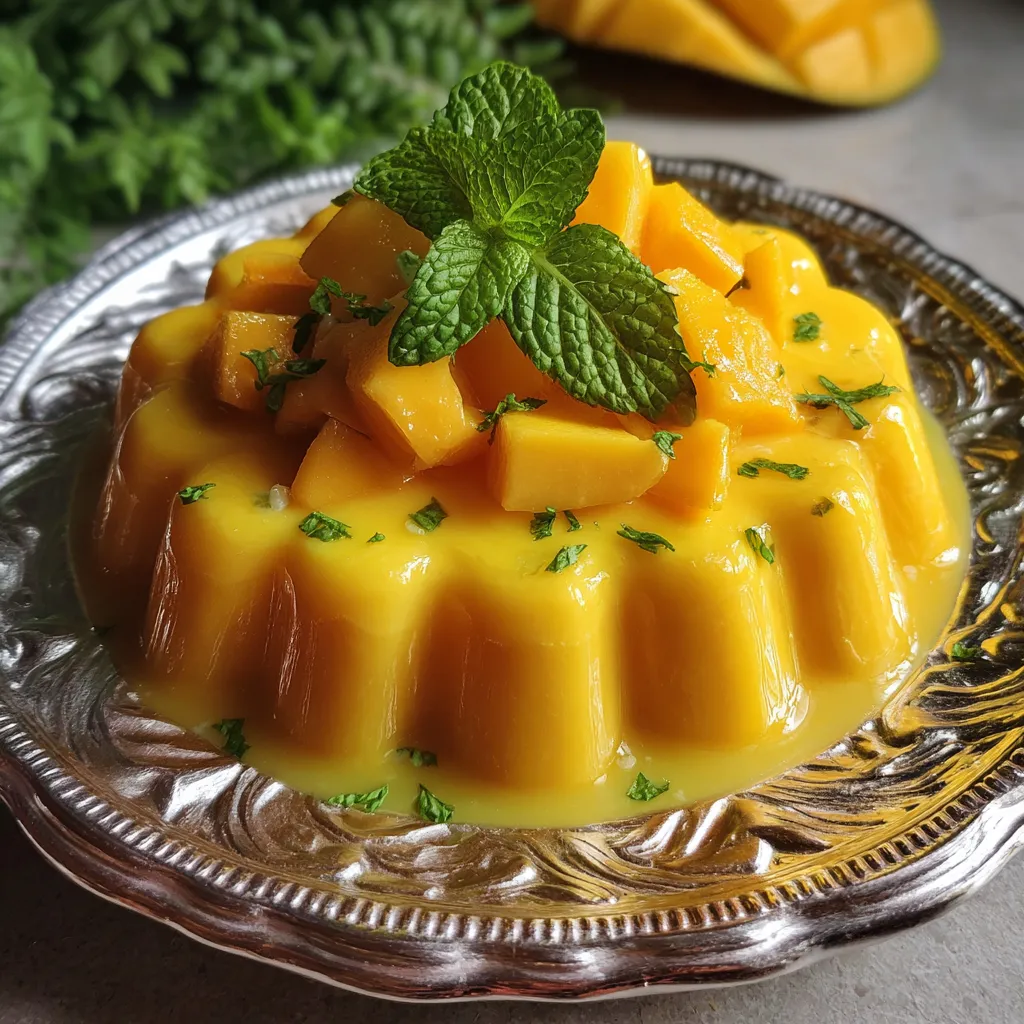
Light Creamy Tropical Mango Mousse is a velvety, sun-kissed treat that dances on your palate with bright citrus notes and airy cream. Experience a cloudlike dessert where lush fruit, tangy lime, and pillowy whipped cream meld into a tropical whisper that melts with every spoonful. This easy-to-make mousse is perfect for ending a summer meal on a light, refreshing note—so grab your blender and let’s bring a bit of sunshine to your table!
Before you start, gather these simple components that create the perfect balance of sweetness, tang, and creaminess:
Transforming fresh mango and a few pantry staples into a dreamy mousse is easier than you think. You’ll start by puréeing the fruit and gently setting it with gelatin, then fold it into whipped cream for that signature light texture. Follow these steps carefully to ensure every spoonful is perfectly smooth and airy:
1. Place the diced mango and sugar in a blender and puree until completely smooth, scraping down the sides as needed to avoid lumps.
2. In a small saucepan, sprinkle the gelatin over the water and let it bloom for 1 to 2 minutes, allowing each granule to swell.
3. Gently heat the gelatin mixture over low heat, stirring constantly until fully dissolved, then immediately whisk it into the warm mango puree.
4. Allow the mango–gelatin blend to cool to room temperature, ensuring it won’t deflate the cream.
5. In a well-chilled bowl, whip the heavy cream at medium speed until soft peaks form, meaning the cream holds its shape but still has a gentle curve.
6. Fold the Greek yogurt, vanilla extract, fresh lime juice, and salt into the whipped cream until evenly mixed and light.
7. Gently fold the cooled mango puree into the cream mixture with a rubber spatula, using figure-eight motions to preserve air until the color is uniform.
8. Divide the mousse among serving cups, cover, and refrigerate for at least 2 hours to let it fully set.
9. Before serving, top each mousse with a sprig of fresh mint for a bright, aromatic garnish.
This Light Creamy Tropical Mango Mousse is not only delicious but also versatile. These serving ideas will help present it like a pro, turning a simple dessert into a showstopper. Whether you’re hosting a dinner party or craving a solo treat, here are four ways to elevate each spoonful:
These friendly pointers will help you nail the texture and flavor every time you whip up this tropical delight. A few small tweaks can make your mousse even silkier, more stable, and extra refreshing:
Once your mango mousse is set, proper storage keeps its flavor and texture intact. Whether you make it ahead for a gathering or simply want to savor some later, here’s how to keep it at its best:
Here are quick answers to common queries about making your mango mousse sparkle:
Ripe mangoes should yield slightly to gentle pressure and have a fragrant, sweet aroma at the stem end. Their skin will show a mix of red, yellow, and orange hues depending on the variety. Avoid green or overly firm mangoes, as they won’t puree smoothly and will taste tart.
After sprinkling the gelatin over cold water, let it sit undisturbed for 1–2 minutes until you see it swell. Then heat it gently over low heat, stirring continuously. Remove it from the heat as soon as it dissolves; overheating can degrade its setting power and texture.
Yes. After dividing the mousse into serving cups, cover each tightly with plastic wrap and refrigerate for up to 24 hours. This preserves the light texture and fresh flavor. Overlong storage may cause slight separation or loss of fluffiness.
Ensure your cream and mixing bowl are well-chilled; warmth prevents proper aeration. Use heavy cream with at least 35% fat. Whip at medium speed and stop as soon as peaks hold without collapsing. Over-whipping can lead to graininess and loss of volume.
Use a large rubber spatula and employ gentle strokes: scoop from the bottom, lift up, and turn the mixture over the top in a figure-eight motion. Rotate the bowl slightly each time. Stop as soon as the color is uniform to preserve air and lightness.
For extra creaminess and a hint of tropical flavor, replace up to half of the Greek yogurt with coconut cream. You can also use mascarpone for richness or low-fat yogurt for reduced calories, though the mousse may be less stiff and more delicate.
Yes. Substitute agar-agar powder at a 1:1 ratio by weight according to its package instructions. Typically, boil it in water for 2–3 minutes until fully dissolved, since agar-agar sets at room temperature and offers a slightly firmer texture than gelatin.
Fresh mint sprigs add brightness, but you can also top with toasted coconut flakes, thin lime zest strips, or a few diced mango cubes for color contrast. Serve on chilled plates to keep the mousse firm and enhance its refreshing character.
This Light Creamy Tropical Mango Mousse is pure sunshine in dessert form—bright, airy, and just sweet enough to bring a smile. The blend of ripe mangoes, tangy lime, and a whisper of vanilla turns a humble set dessert into a tropical escape. It works every time because the gelatin gives it structure, while the whipped cream and Greek yogurt keep it feather-light. Feel free to print this recipe and save it for a spontaneous island vibe at home. Have questions or tried it yourself? Drop a comment—your feedback is the cherry (or mango!) on top.
Experience a cloudlike mango mousse, where lush fruit, tangy lime, and pillowy whipped cream meld into a tropical whisper that melts with every spoonful.

Ciao, beautiful souls! I'm Isabella Romano, and welcome to my kitchen where comfort meets creativity, and every recipe is designed to make your everyday cooking feel a little more special.