
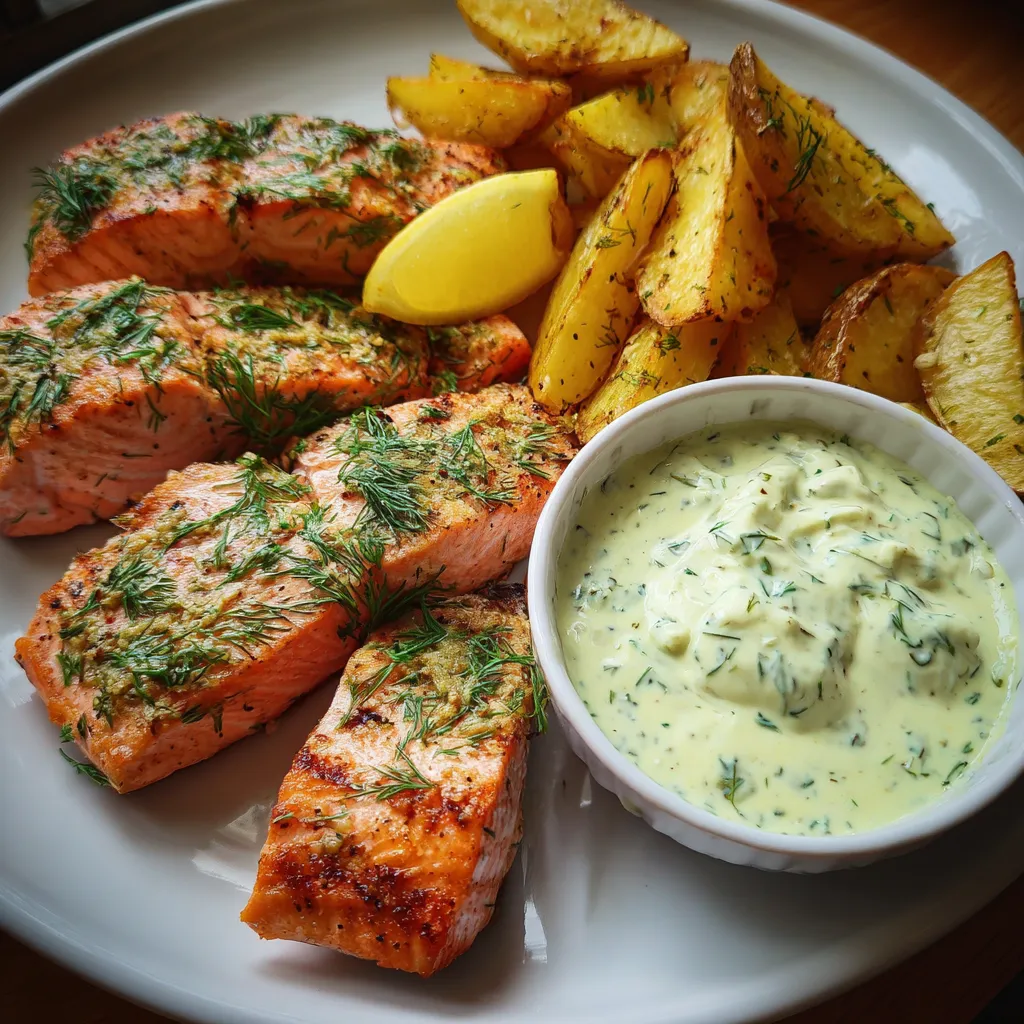
Flaky salmon fillets kissed with fresh dill and garlic meet golden, paprika-spiced potato wedges in this mouthwatering dinner that’s as comforting as it is elegant. A cool, creamy pickle and dill sauce adds the perfect tangy crunch to every bite, making it an absolute crowd-pleaser for weeknight feasts or casual get-togethers. Trust me, once you taste this combo, you’ll be hooked—let’s dive into the details!
Before you roll up your sleeves, let’s gather everything you need to bring this vibrant plate to life:
Get ready for a stress-free cooking session that yields tender fish, crisp wedges, and a dreamy sauce—all from one oven. You’ll roast the potatoes first, then slide in the salmon mid-way so everything finishes together. Meanwhile, whipping up the sauce takes mere minutes and can be prepared ahead to let flavors mingle. Let’s walk through each step:
1. Preheat your oven to 425°F (220°C) and line a baking sheet with parchment paper for easy cleanup and maximum crispiness.
2. In a large bowl, toss the potato wedges with olive oil, paprika, garlic powder, salt, and pepper until each wedge is evenly coated.
3. Spread the seasoned wedges in a single layer on the prepared sheet and bake for 25–30 minutes, flipping halfway to ensure they become golden brown and crisp on all sides.
4. While the potatoes roast, combine olive oil, chopped dill, garlic powder, salt, and pepper in a small bowl for the salmon marinade.
5. Place the salmon skin-side down on another parchment-lined sheet and brush the herb-garlic mixture generously over the top.
6. Bake the salmon during the last 12–15 minutes of the potato cooking time, until the fish is opaque and flakes easily with a fork.
7. As everything cooks, prepare the sauce by stirring together sour cream, finely chopped pickles, fresh dill, lemon juice, and garlic powder in a medium bowl until smooth and well combined.
8. Once done, remove both trays from the oven and let everything rest briefly. Plate the dill salmon alongside the crispy potato wedges and drizzle generously with the creamy pickle and dill sauce.
This dish looks as good as it tastes, so presentation is key! Whether you’re aiming for casual comfort or Instagram-worthy flair, here are some ideas to elevate your plate:
Mastering this flavorful ensemble is all about timing and seasoning. The secret lies in letting those herbs shine and ensuring each element complements one another. Keep your salmon tender by not overbaking, and don’t skimp on flipping the wedges for even browning. If you want to prep ahead, mix the sauce early to let the pickle flavors deepen. Remember, a well-seasoned dish invites happy diners—so taste and adjust as you go!
Leftovers? No problem! Keeping these components fresh and flavorful only takes a few simple steps:
Got questions? We’ve rounded up the top queries so you can dive in with confidence:
A: This recipe takes about 10 minutes to prep—washing and cutting potatoes, mixing seasonings, and arranging baking sheets—and around 30 minutes to cook in the oven. The potatoes need 25–30 minutes at 425°F (220°C), and the salmon bakes for the last 12–15 minutes of that time. Plan for a total of roughly 40 minutes from start to finish.
A: Cut the potatoes into uniform wedges so they cook evenly. Toss them thoroughly in olive oil, paprika, garlic powder, salt, and pepper, then spread them in a single layer without overcrowding. Flip halfway through cooking at 425°F (220°C). Using parchment paper helps prevent sticking and promotes crispiness, and you can soak the cut wedges in cold water for 15 minutes before drying to remove excess starch.
A: Yes. After mixing the olive oil, fresh or dried dill, garlic powder, salt, and pepper, place the salmon fillets in a resealable bag or shallow dish, pour the mixture over them, and refrigerate for up to 2 hours. This extra time lets the dill and garlic flavors penetrate the fish. Remove the salmon from the fridge about 15 minutes before baking to come to room temperature.
A: Store the salmon, potato wedges, and creamy pickle and dill sauce separately in airtight containers in the refrigerator for up to 3 days. Reheat the potatoes on a baking sheet at 400°F (200°C) or in an air fryer for 5–7 minutes to restore crispness. Warm the salmon gently in the oven at 300°F (150°C) for 8–10 minutes, and serve with cold or room-temperature sauce.
A: Yes. Swap regular potatoes for sweet potatoes for a more nutrient-dense option and a hint of natural sweetness. If you don’t have fresh dill, use half the amount of dried dill (1 tablespoon dried equals about 2 tablespoons fresh). To lighten the sauce, replace some or all of the sour cream with Greek yogurt.
A: For a thinner sauce, stir in a teaspoon or two of lemon juice or a splash of milk until you reach your desired pourable consistency. For a thicker dip, add extra sour cream or finely chopped pickles. Taste as you go to balance the tang from the pickles and lemon with the creaminess of the base.
A: This dish pairs beautifully with steamed asparagus, green beans, or a crisp garden salad dressed with lemon vinaigrette. For extra color, roast cherry tomatoes alongside the potatoes, or serve crusty bread to soak up any remaining sauce.
This recipe shines because it balances textures—flaky, herb-infused salmon; golden, crisp wedges; and a tangy, creamy sauce loaded with pickle crunch. It’s simple enough for a busy weeknight yet fancy enough to impress guests. Plus, everything bakes in the oven at once, so cleanup’s a breeze. Feel free to print and save these notes for later, and drop a comment below if you try it or have any questions. Your feedback makes cooking even more fun!
Flaky salmon fillets, fragrant with fresh dill and garlic, bake alongside golden paprika-crisped potato wedges. A cool, creamy sauce studded with chopped pickles and dill brightens every bite with tangy crunch.

Ciao, beautiful souls! I'm Isabella Romano, and welcome to my kitchen where comfort meets creativity, and every recipe is designed to make your everyday cooking feel a little more special.