
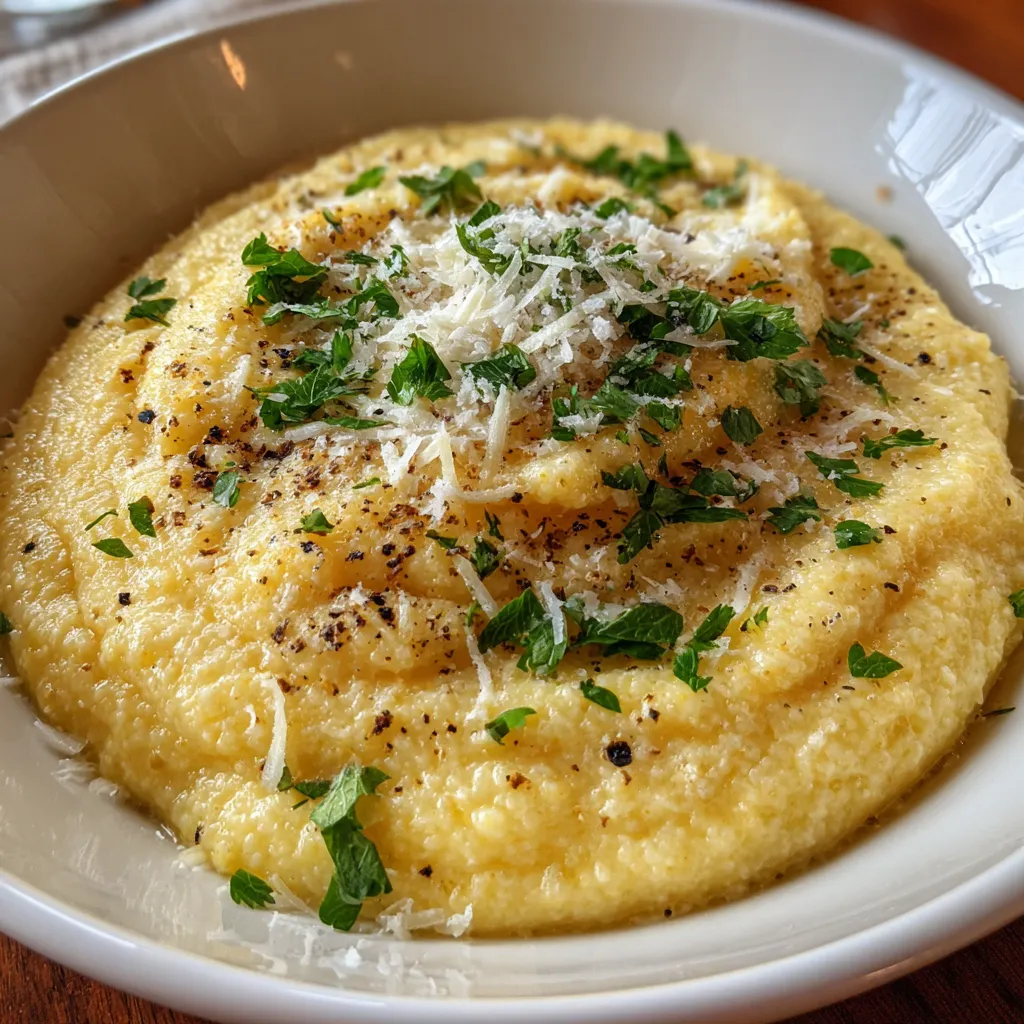
Creamy Parmesan Polenta delivers a velvety, cheesy hug in every spoonful. This stovetop classic gets whipped with butter and freshly grated Parmesan, creating a luscious base with just a hint of black pepper and bright pops of parsley. Perfect for a cozy dinner or as a fancy side, this beginner-friendly recipe will have you stirring up pure comfort in under 30 minutes—let’s dig in!
Before you dive in, make sure you have these simple staples on hand:
Creating this silky polenta is all about patience and gentle stirring. You’ll gradually build a rich, creamy base and finish with glossy butter and melted Parmesan for that irresistible, comforting taste. Ready your whisk and saucepan—let’s turn these simple ingredients into pure bliss:
1. In a medium saucepan, combine 4 cups water, 1 cup milk, and 1 teaspoon salt. Heat over medium until it just reaches a gentle boil.
2. Gradually whisk in 1 cup coarse cornmeal, adding it in a steady stream to prevent lumps from forming.
3. Reduce heat to low and cook—stirring frequently with a wooden spoon—until the mixture thickens and becomes velvety, about 15 to 20 minutes.
4. Stir in 2 tablespoons unsalted butter and 1/2 cup grated Parmesan cheese, blending until everything is fully melted and incorporated.
5. Season with 1/4 teaspoon black pepper and taste; adjust salt if needed for perfect balance.
6. Spoon the polenta into warm bowls and finish with a sprinkle of 1 tablespoon chopped fresh parsley before serving.
This Creamy Parmesan Polenta shines as both a hearty main and a star side. Here are a few ways to elevate your plate and make it truly memorable:
With just a few friendly pointers, your polenta will turn out smooth, flavorful, and absolutely crave-worthy every time:
Leftover polenta can be just as delightful as freshly made—if stored properly. Here’s how to keep it tasting its best:
Got a quick question? Here’s what home cooks often ask:
From start to finish, this recipe takes about 25 to 30 minutes. That includes bringing the water, milk, and salt to a gentle boil (5 minutes), whisking in the cornmeal and reducing the heat (2 minutes), then stirring frequently for 15 to 20 minutes as the polenta thickens. Finally, you’ll stir in butter and cheese (1–2 minutes) before seasoning and serving.
Yes. You can replace up to half of the water with chicken or vegetable stock. Simply bring 2 cups water, 2 cups stock, and the salt to a gentle boil before adding the cornmeal. The stock adds savory depth without altering the cooking time. Taste before seasoning with additional salt, since some broths may be salted.
Coarse cornmeal yields the best texture—lightly grainy yet smooth when cooked properly. Finely ground or instant cornmeal will cook faster but can turn gluey or mushy. Avoid instant polenta if you want the classic creamy, slightly textured bite that coarse cornmeal provides.
To prevent lumps, whisk the cornmeal in slowly and continuously as you sprinkle it into the boiling liquid. If small lumps form, press them against the side of the pan with a wooden spoon or spatula to break them up. If the mixture becomes too thick before the cornmeal is fully cooked, add a splash of warm water or milk and keep stirring until it smooths out.
Polenta firms up as it cools. If it gets too stiff while cooking or upon reheating, stir in a tablespoon or two of warm milk or water at a time over low heat until you reach your desired creaminess. Return the polenta to a gentle simmer while stirring until fully loosened.
Store leftovers in an airtight container in the refrigerator for up to 4 days. For reheating, transfer the polenta to a saucepan over low heat, add a splash of milk or water, and stir constantly until smooth and warmed through. You can also spread chilled polenta into a pan, chill until set, cut into shapes, and fry or grill for a crisp variation.
Absolutely. While Parmesan provides a salty, nutty backbone, you can swap in Pecorino Romano for a sharper bite or stir in a handful of shredded fontina or Gruyère for extra creaminess. For a herbed twist, mix in chopped basil or thyme along with the parsley. Just add these at the end, after the butter has melted, to preserve their flavors.
This Creamy Parmesan Polenta works wonders because it balances silky, cheesy richness with just the right amount of peppery warmth and herbaceous brightness. Whipped with butter and freshly grated Parmesan, it’s a comforting twist on a classic that’s both beginner-friendly and endlessly versatile. Feel free to print or bookmark this guide for your next cozy night in, and don’t forget to share your thoughts, tweaks, or questions—your kitchen adventures are always welcome here!
Silky, creamy polenta cooked low and slow, enriched with melted butter and Parmesan. Each spoonful offers a rich, cheesy warmth with a whisper of black pepper and fresh parsley for brightness.

Ciao, beautiful souls! I'm Isabella Romano, and welcome to my kitchen where comfort meets creativity, and every recipe is designed to make your everyday cooking feel a little more special.